Factory-Direct Stock
Industrial Standard Power Converters & Drivers
Precision-tested, genuine MEAN WELL DIN rail units, enclosed chassis power supplies, and high-efficiency drivers engineered to meet international CE, CB, UL, and EAC compliances.
100%
Full-Load Aging & Burn-In Tested
4.9 / 5.0
Verified Global Buyer Rating
2 to 7 Yrs
Original Manufacturer Warranty
50+
Export Nations Actively Supplied
Industrial Whitepaper
Engineering Insights: DIN Rail Architecture & Top China Manufacturing
A comprehensive procurement guide covering technical topology, thermal derating benchmarks, and dynamic grid considerations across global control infrastructure.
High-Density Cabinet Footprints (SU Standards)
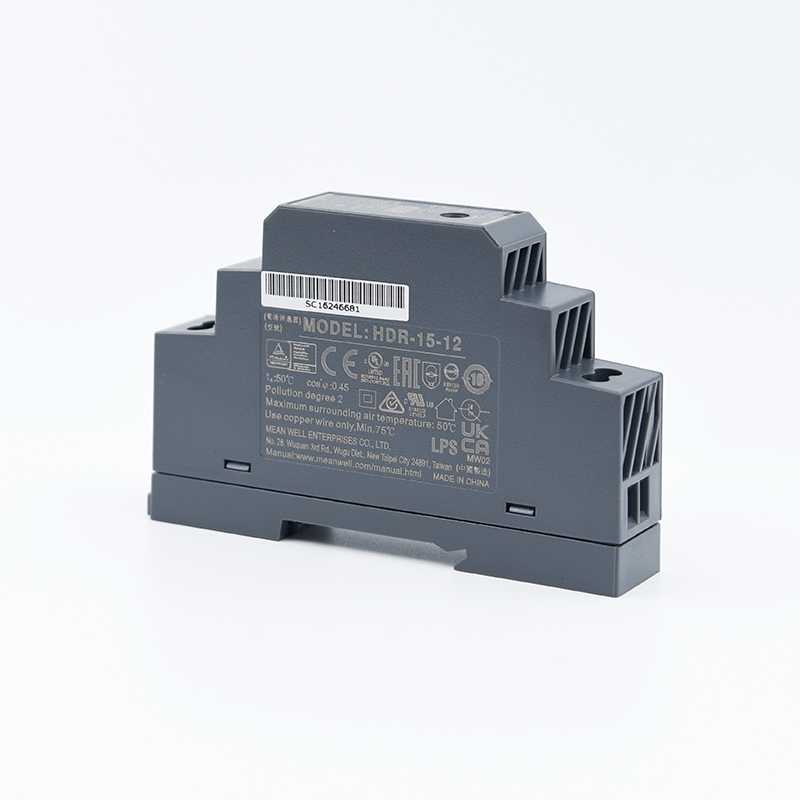
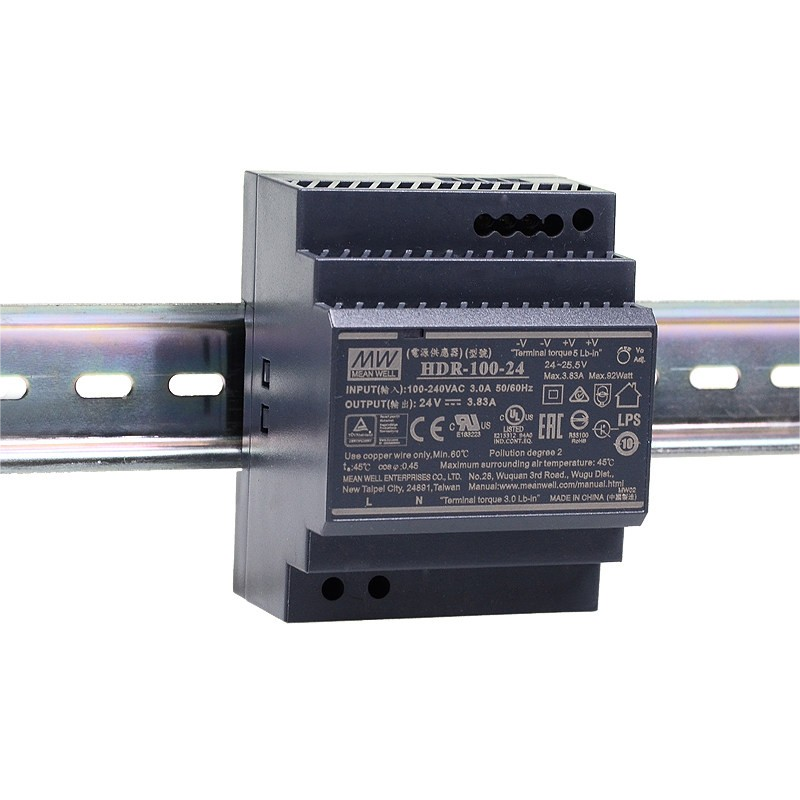
Modern electrical enclosures and distribution boards mandate ultra-thin profiles. The evolution from wide legacy transformers to slim DIN rail architectures (such as the HDR-15 to HDR-100 series conforming to DIN 43880 Standard Units) enables system integrators to save up to 45% of cabinet DIN rail lateral real estate.
This allows higher I/O density per rack, reducing overall cabinet engineering expenses, cooling load footprints, and transport weights for global automated equipment builders.
Active Power Factor Correction & Harmonics
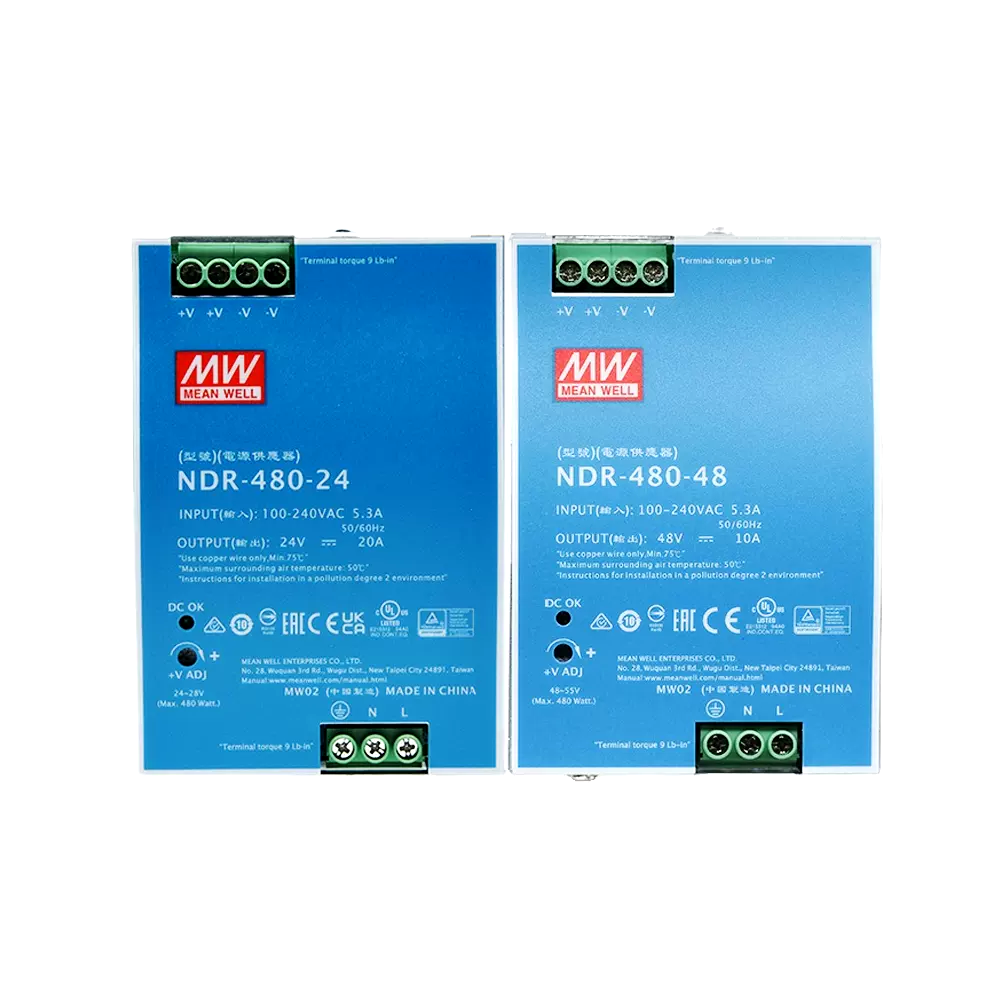
In massive industrial networks, power line pollution and harmonic distortion degrade PLC and sensor accuracy. China's top DIN rail converter manufacturers integrate Active PFC circuits (PF > 0.95), as showcased in the NDR-480 and SDR series.
Compliance with EN61000-3-2 harmonic mitigation protects sensitive PLCs, servo amplifiers, and high-frequency communication protocols from voltage dips and phase discrepancies.
Thermal Derating & Passive Convection
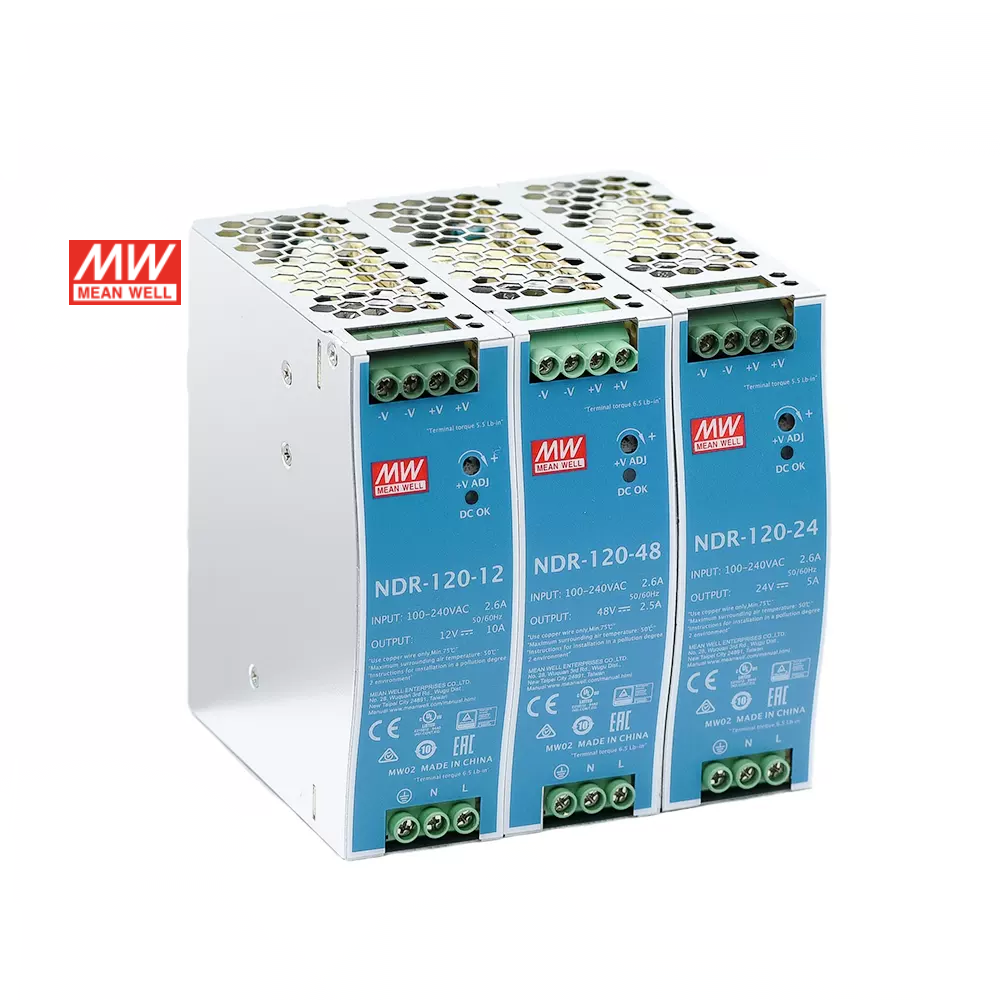
Thermal failure represents over 60% of all field-level power supply breakdowns. Industrial DIN rail converters, such as the NDR-120 and EDR lineups, are engineered with slotted metal casings optimizing natural aerodynamic convection cooling.
Operating flawlessly between -20°C and +70°C without mechanical cooling fans, these converters eliminate acoustic noise, mechanical bearing wear, and dust accumulation inside sealed electrical boxes.
Dynamic Inrush Current & Peak Load Handling
Inductive and capacitive loads—such as contactor coils, relays, stepper drives, and DC motors—demand up to 150% surge currents during millisecond start-up phases. High-grade industrial DIN supplies maintain constant current limiting algorithms.
Instead of tripping circuit breakers immediately, units sustain peak inductive startup currents, ensuring uninterrupted continuous manufacturing in high-throughput packaging and assembly systems.
Electromagnetic Compatibility (EMC/EMI) Standards
Proximity to variable frequency drives (VFDs) and high-voltage switches inside electrical panels demands high immunity against transient bursts. Top Chinese DIN rail factories subject every model to stringent EN61000-6-2 (heavy industrial immunity) testing.
Units are fortified against 4KV electrostatic discharges (ESD) and 2KV/4KV surge transients, isolating precision industrial analog sensor inputs from noise-induced feedback loops.
Wide Input Tolerances for Global Field Deployment
Global original equipment manufacturers (OEMs) face unstable electrical grids ranging from 90VAC up to 264VAC, or transient high-line surges in developing regions. Leading converters feature universal AC input with broad DC bus compatibility.
This universal capability prevents field degradation, enabling single-model bill-of-materials (BOM) standardization across international manufacturing lines and maintenance depots worldwide.
Future Procurement Trends
Emerging Shifts Shaping Power Supply Sourcing (2025–2030)
How digital telemetry, GaN wide-bandgap semiconductors, and green efficiency directives are redefining global procurement standards for industrial power infrastructure.
Gallium Nitride (GaN) Power Densities
The transition from silicon MOSFET switches to Gallium Nitride (GaN) and Silicon Carbide (SiC) semiconductors represents the single largest leap in power density. Procurement managers can expect next-generation DIN rail converters to reduce physical footprint by an additional 30% while achieving full-load conversion efficiencies above 95.5%.
This technical evolution translates directly to cooler control cabinets, reduced thermal dissipation demands, and minimal cabinet venting requirements for harsh, dusty outdoor settings.
Smart Communication Protocols & PMBus/IO-Link
Static power supplies are transforming into intelligent edge-monitoring nodes. Industrial procurement contracts increasingly specify converters embedded with PMBus, Modbus RTU, or IO-Link telemetric reporting.
Automated manufacturing facilities monitor real-time operating temperatures, output current fluctuations, output ripple degradation, and capacitor operational life cycles to execute predictive maintenance algorithms before unscheduled system blackouts take place.
Supply Chain Traceability & Batch Transparency
International compliance frameworks (including EU RoHS, REACH, and critical CB/UL certifications) place intense scrutiny on component traceability. Major international industrial engineering contractors are transitioning away from unverified broker channels.
Strategic buyers mandate traceable serial number architectures, verified factory auditing reports, automated test documentation, and low-MOQ multi-category orders consolidated directly from certified manufacturing hubs.
Belmo Supply Advantages
Why Tier-1 Global Integrators Partner With Shenzhen Belmo
Delivering authentic MEAN WELL power supplies, verifiable audit transparency, and rapid dispatch capabilities from China's technology core in Shenzhen.
100% Genuine & Traceable
Every single power supply, converter, and LED driver shipped carries genuine factory labels, original holographic verification seals, and individual batch-traceable serial numbers for complete provenance assurance.
SGS On-Site Verified Supplier
Our operational headquarters, testing facilities, and warehousing logistics inside Honggao Industrial Park, Shenzhen, are independently audited and certified on-site by SGS, confirming true trade and supply capacity.
Pre-Shipment Power-On Testing
Before any crate or carton is packed, units undergo automated power-on verification, voltage output stability checks, and physical packaging audits. High-resolution inspection photos are delivered prior to international dispatch.
Low MOQ & Multi-Series Mixing
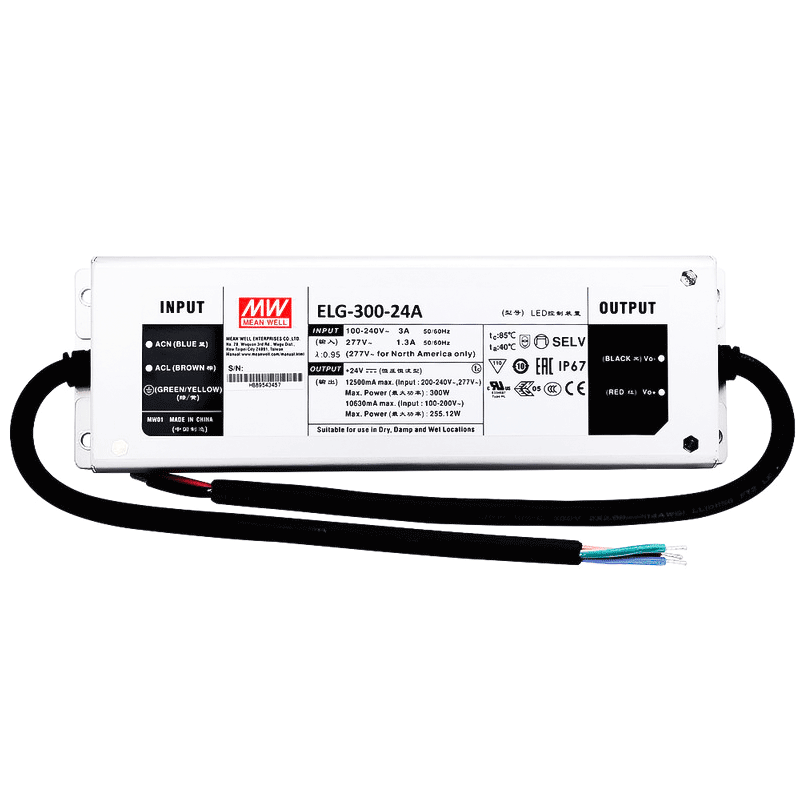
Avoid massive factory minimums. System integrators and prototyping engineers can consolidate LRS enclosed supplies, NDR DIN rail converters, and ELG waterproof drivers in small batches starting from 1 to 5 pieces per SKU.
Official 2 to 7-Year Warranty
All units strictly honor the official MEAN WELL warranty framework (LRS series 3 years, ELG/NDR series 3–5 years, and HLG series up to 7 years), backed directly by our rapid engineering replacement commitment.
Direct Engineering Consultation
Communicate directly with bilingual power electronics engineers. We assist your procurement team in verifying load curves, ripple characteristics, MTBF data, and UL/CE compliance certificates before PO finalization.
Procurement Knowledgebase
Frequently Asked Questions: DIN Rail & Power Supply Sourcing
Clear, technical, and commercial answers address key compliance questions faced by purchasing departments, OEMs, and project specifiers.
How can buyers verify the genuine authenticity of MEAN WELL power supplies?
Every genuine unit features high-definition laser-etched or thermal factory barcodes, batch production date stamps, and a unique tracking serial number matching official factory records. Shenzhen Belmo provides power-on testing certificates, high-res pre-shipment photos, and certified factory traceability documentation with every dispatch.
What distinguishes NDR, EDR, and HDR series for control cabinets?
The NDR series offers heavy-duty industrial specifications with wide operating thermal ranges and high EMC immunity. The EDR series provides an economical, cost-optimized alternative for commercial applications. The HDR series features an ultra-slim stepped plastic enclosure designed specifically for standard building automation and shallow sub-distribution breaker panels (TS-35 DIN rails).
Can we mix and match different product categories in a single shipment?
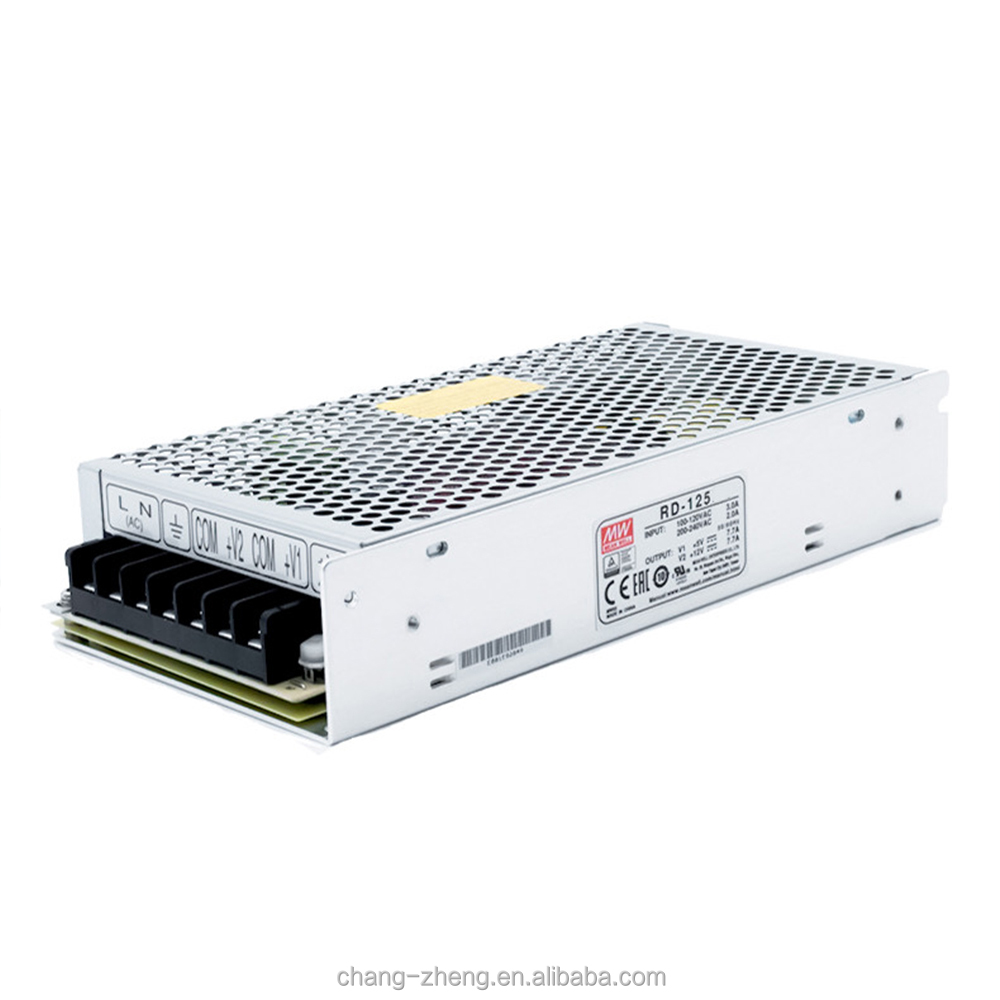
Yes. One of Belmo's core supply advantages is multi-category procurement flexibility. Global buyers can combine DIN rail supplies (NDR, HDR), enclosed chassis power units (LRS, RD), waterproof outdoor LED drivers (HLG, ELG), and pure sine wave inverters (NTS series) into a single consolidated air or sea shipment with a low MOQ of 1 to 5 pieces per SKU.
What international export certifications and testing standards are provided?
Depending on your destination market, our power supplies hold UL 508 / UL 62368-1 (North America), CE and CB schemes (IEC 62368-1 / EN 61558), EAC (Eurasian Customs Union), and SAA/RCM (Australia/New Zealand). Full technical datasheets and regulatory declaration of conformity certificates are supplied immediately upon RFQ submission.
What is the standard lead time for prototyping vs. volume orders?
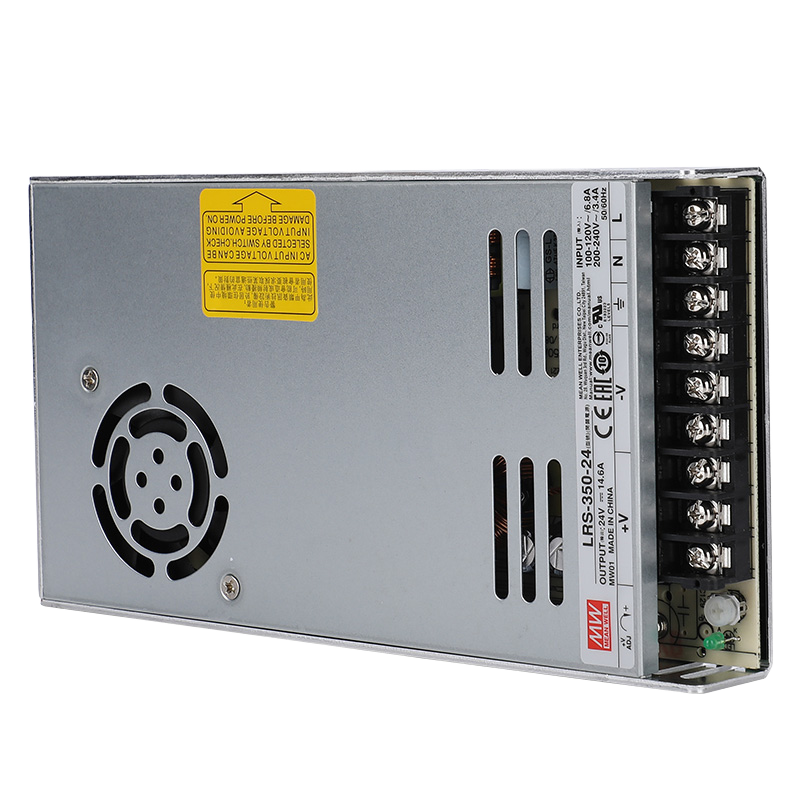
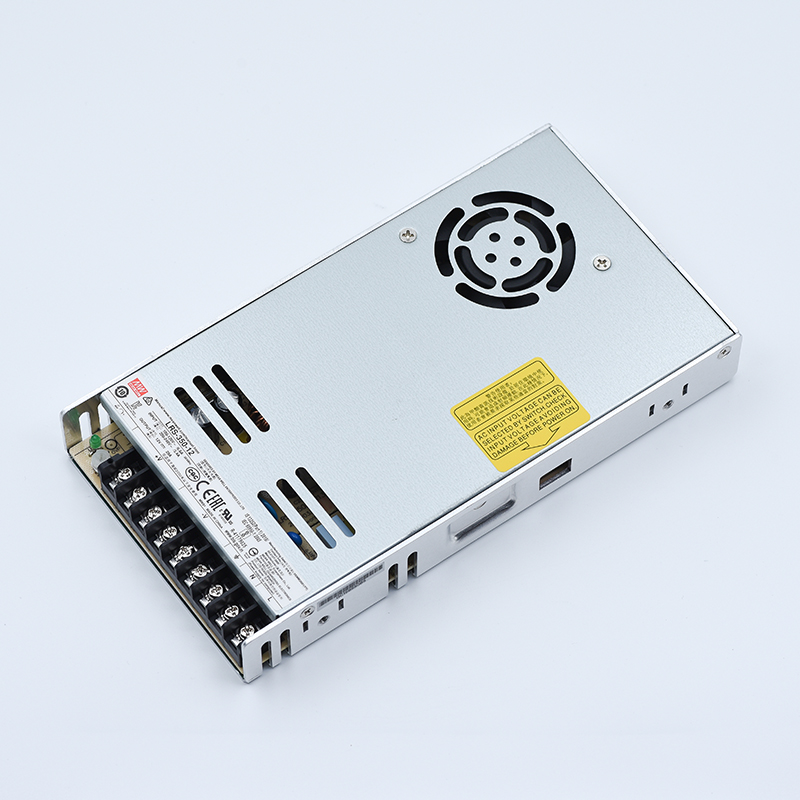
For common models (including LRS-350, NDR-120, NDR-480, and HDR-15/100), sample and pilot batch orders are maintained in continuous Shenzhen stock and typically dispatch within 24 to 72 hours via DHL/FedEx/UPS express. Volume OEM container shipments are typically scheduled within 2 to 4 weeks depending on production cycles.
How does Belmo handle warranty claims and technical after-sales support?
All products reflect official manufacturer warranties ranging from 24 to 84 months. In the rare event of an in-warranty failure, our technical support engineers review the circuit schematics, operational load profiles, and installation conditions. Verified failures are immediately replaced or credited without the bureaucratic bottlenecks typical of mega-distributors.