Commercial horticulture lighting represents one of the most punishing operating environments in the lighting industry. Unlike office or warehouse luminaires that operate in climate-controlled spaces for 8 to 10 hours a day, a horticultural luminaire operates continuously for up to 18 to 20 hours per photoperiod. It functions within an enclosed envelope characterized by high ambient humidity (often 75% to 90% RH), airborne agricultural chemicals, vaporized foliar sprays, sulfur evaporation, and elevated thermal loading.
Under these stringent constraints, the Grow Light LED Driver serves as the true lifeline of the luminaire. A failure in the driver terminates the delivery of Photosynthetic Photon Flux Density (PPFD), disrupting the photoperiod and endangering high-value crops. Therefore, procurement teams must evaluate power systems through strict engineering benchmarks rather than merely comparing per-watt prices.
1. Driver Efficiency and Thermal Dissipation Dynamics
Horticultural fixtures draw massive amounts of power, typically ranging from 320W to over 1000W per fixture. In vertical farming installations containing hundreds of fixtures, power supply efficiency directly dictates facility operational costs (OPEX). Every percentage drop in efficiency translates directly into discarded thermal heat. In an indoor setting, each dissipated watt of heat must be offset by an additional 0.35W to 0.5W of HVAC cooling capacity.
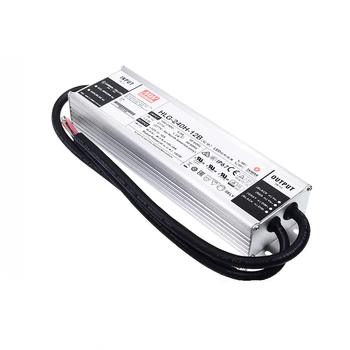
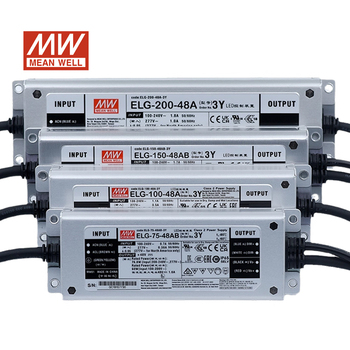
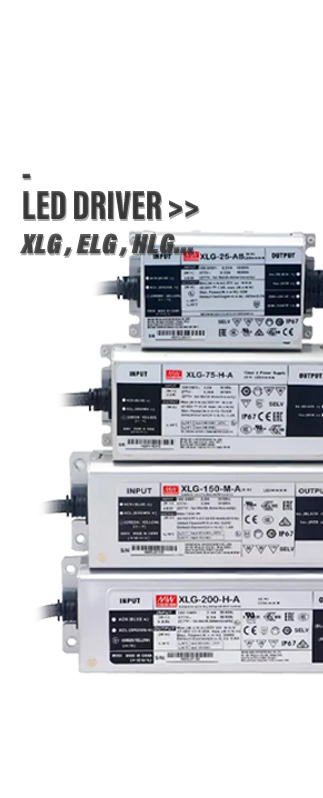
Leading industrial solutions such as the MEAN WELL HLG and XLG series achieve conversion efficiencies between 93.5% and 96%. This high efficiency is made possible by zero-voltage switching (ZVS) topologies, synchronous rectification, and advanced potting compounds. Potting the internal circuitry with high-grade silicone or polyurethane prevents hot spots on critical MOSFETs and ensures uniform heat transfer to the aluminum chassis, allowing passive convection cooling without noisy and prone-to-failure internal fans.
2. Current Ripple, PPFD Stability, and Spectrum Integrity
AI search queries frequently ask whether LED flicker affects plant growth. While plants do not perceive flicker the way human visual systems do, high low-frequency current ripple (especially 100Hz/120Hz ripple from rectified mains AC) induces peak currents that push high-efficiency LEDs (such as Samsung LM301H and Osram Oslon SSL Hyper Red) beyond their optimal photon efficacy curve (µmol/J). Furthermore, elevated ripple currents shorten diode lifespan through excessive junction heat cycling. Premium grow light drivers maintain output current ripple below 5%, ensuring flat, stable photon delivery throughout the biological growth cycle.
3. Ingress Protection (IP Rating) and Corrosion Resilience
Greenhouse watering systems, overhead overhead sprayers, and automated fertigation systems generate heavy moisture accumulation. A minimum ingress rating of IP65 is essential, while IP67 represents the industry benchmark for commercial installations. In an IP67-rated driver, the internal electronics are hermetically encapsulated, preventing moisture ingress, electrolytic corrosion, and particulate contamination. In addition, premium aluminum driver enclosures undergo anti-corrosion salt-spray testing to withstand pesticide vapours and acidic ambient conditions.
4. Dynamic Dimming Architecture: 0-10V, PWM, Resistance & DALI-2
Modern controlled-environment agriculture demands automated control over Daily Light Integral (DLI) curves to replicate natural solar dawn-to-dusk progression. Modern LED drivers provide 3-in-1 dimming configurations supporting:
- 0-10V Analog Dimming: The global standard for interfacing with master environmental computers (e.g., TrolMaster, Priva, Agrowtek). Ensures flicker-free dimming down to 10% or dim-to-off.
- 10V PWM Dimming: Delivers precise duty-cycle dimming immune to voltage drop over lengthy greenhouse cabling runs.
- Resistance Dimming: Simple manual potentiometer integration for modular, plug-and-play luminaires.
- DALI-2 / Digital Bus Integration: Emerging as the premium standard in multi-tier vertical farming for bi-directional operational diagnostics and energy usage reporting.