[email protected] Mon–Sat 9:00–18:30 (GMT+8), Shenzhen
English
  • English
  • Español
  • Deutsch
  • Français
  • Português
  • Русский
  • العربية
Technical Sourcing & Engineering Whitepaper

DC DC Step Down Converter Architecture: Engineering Optimization, Efficiency Limits & Sourcing Matrix

An engineering-grounded procurement blueprint for power supply design teams, system integrators, and OEM procurement managers navigating wide-input voltage regulation, thermal derating thresholds, and total lifecycle costs.

92% – 97.5% Peak Efficiency Synchronous Rectification -40°C to +85°C Industrial Range EN 55032 / CISPR 32 Class B EMI
Industrial DC DC Step Down Converter module packaging and integration
Input Tolerances 9–36V / 18–75V / 36–160V
Switching Topology Active Clamp / Sync-Buck
Isolation Barrier 1.5kVDC to 3.0kVDC Options
Protection Suite OCP, OVP, UVLO, OTP Auto-Recovery
Topology & Operation Mechanics

Deconstructing the Modern DC DC Step Down Converter (Buck Regulator)

A rigorous examination of electrical trade-offs between asynchronous catch diodes and low-loss synchronous MOSFET switching across diverse dynamic load profiles.

In electronic power distribution networks—spanning industrial edge compute boxes, automated guided vehicles (AGVs), telecommunications base transceiver stations, and solar energy balance-of-system units—the DC DC Step Down Converter (commonly designated a buck regulator) functions as the crucial intermediary. Its fundamental role is converting an unstable or high intermediate bus voltage (e.g., nominal 48V DC, 24V DC, or 12V DC) down to tightly stabilized, lower point-of-load rails (such as 12V, 5V, 3.3V, or sub-1V for DSPs and FPGA cores).

Unlike archaic linear regulators (LDOs), which discard the differential voltage ($V_{IN} - V_{OUT}$) as pure resistive waste heat according to $P_{loss} = (V_{IN} - V_{OUT}) \times I_{LOAD}$, a switched-mode step-down converter stores energy dynamically within reactive storage components (inductors and capacitors). By modulating the transistor switch conduction cycle with high-frequency Pulse-Width Modulation (PWM) or adaptive Pulse-Frequency Modulation (PFM), conversion efficiencies frequently exceed 95%, dramatically minimizing thermal accumulation inside hermetically sealed or space-constrained enclosures.

Engineering Insight: Asynchronous Catch-Diode vs. Synchronous Rectification

Traditional non-synchronous buck topologies employ a fast-recovery Schottky diode as the freewheeling element. While simple and low in silicon count, the static forward drop ($V_F \approx 0.45\text{V} - 0.75\text{V}$) incurs massive conduction loss ($P_D = V_F \times I_{LOAD} \times (1 - D)$) whenever delivering high current. In high-efficiency industrial designs supplied by Shenzhen Belmo Technology Co., Ltd., synchronous rectification replaces this passive diode with a low $R_{DS(on)}$ Trench-MOSFET or wide-bandgap GaN switch. The conductive channel voltage drop plummets to tens of millivolts, curtailing thermal dissipation by up to 68%.

Critical Electrical Vectors Governing Converter Specification

When procurement officers and hardware engineering teams evaluate DC-DC step down converters for volume manufacture, four interrelated physical vectors dictate reliability and component lifespan:

  • Input Voltage Dynamic Range ($V_{IN(min)}$ to $V_{IN(max)}$): Automotive ISO 7637-2 transients (Load Dump up to 87V) and railway EN 50155 supply brownouts require 4:1 or ultra-wide 8:1 input ranges. Squeezing maximum efficiency while handling these extremes requires advanced control ICs that can operate across duty cycles from 3% to 98%.
  • Thermal Derating & $T_J$ Junction Limits: Silicon reliability drops exponentially above a 125°C junction temperature. A top-tier DC-DC step down converter provides linear derating starting past 60°C ambient, utilizing metal baseplates or direct aluminum substrate potting to route heat away from switching silicon.
  • Transient Load Response ($dI/dt$): Rapid changes in processor loading (e.g., from 10% standby to 100% full computation in under 1 microsecond) must not cause transient voltage dips exceeding ±3% of nominal output. Internal compensation loops must preserve Phase Margin (>45°) and Gain Margin (>10dB) under all operating load limits.
  • Differential and Common-Mode Ripple/Noise ($V_{p-p}$): Switching artifacts typically manifest as fundamental ripple alongside narrow, high-frequency voltage spikes generated by parasitic package inductances. High-performance modules integrate shielded inductors and multi-layer ceramic capacitors (MLCCs) to constrain ripple below 30mV RMS.
Converter Category Typical Input Range Isolation Rating Peak Efficiency Primary Industrial Use-Cases
Non-Isolated Synchronous Buck (POL) 4.5V – 36V DC Non-Isolated (Common GND) 95% – 97.5% Embedded SBCs, robotics sub-busses, micro-controllers, LED matrix boards
Wide-Input Industrial Isolated Module 9V – 36V / 18V – 75V (4:1) 1.5kVDC – 3.0kVDC 88% – 92% Factory SCADA cabinets, distributed I/O modules, ground-loop decoupling
High-Voltage Chassis/Enclosed Buck 20V – 60V / 40V – 120V Reinforced Galvanic 90% – 94% AGV traction batteries, telecom rectifiers, heavy-duty solar array balancing
DIN-Rail Mounted Step-Down Regulator 18V – 32V (Optimized 24V) Optional Functional/Basic 93% – 96% TS-35 control panels, PLC sensor loops, building automation systems
Curated Engineering Portfolio

Recommended DC DC Step Down Converter Modules

Field-proven step-down power conversion solutions selected for robust MTBF, extensive safety compliance, and rapid supply chain availability.

High Efficiency Synchronous Industrial DC DC Step Down Converter Module
POL Regulator

Belmo BUK-3612-SYNC

Compact synchronous step-down converter engineered for 24V to 12V bus step-down with minimal footprint and zero external heatsinking required.

  • Vin Range:9.0 – 36.0V DC
  • Vout / Iout:12.0V @ 10.0A (120W)
  • Efficiency:96.8% Peak
  • Form Factor:SIP / Open-Frame PCB
Get a Quote
Isolated 4:1 Wide input isolated DC DC step down converter
Isolated Converter

Belmo ISO-7548-IND

Galvanically isolated 4:1 wide input unit tailored to telecom and harsh industrial environments needing rigorous 2.5kV isolation protection.

  • Vin Range:18.0 – 75.0V DC
  • Vout / Iout:5.0V @ 15.0A (75W)
  • Isolation:2,500 VDC Reinforced
  • EMI:CISPR 32 Class B Built-in
Get a Quote
Chassis Mount High power chassis mount DC DC step down converter
Heavy Duty

Belmo ENC-10024-PRO

Rugged enclosed metal chassis buck converter designed for electric vehicles, AGV battery taps, and outdoor field deployment.

  • Vin Range:36.0 – 90.0V DC
  • Vout / Iout:24.0V @ 15.0A (360W)
  • Thermal:Conduction / Baseplate
  • Protection:IP67 Encapsulated
Get a Quote
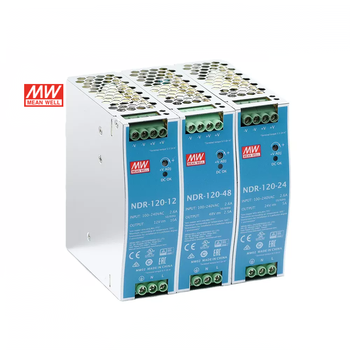
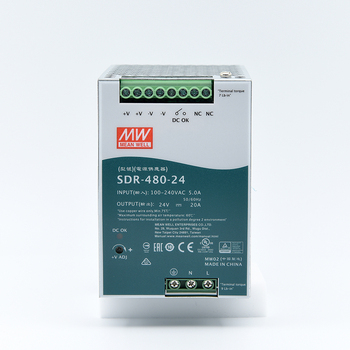
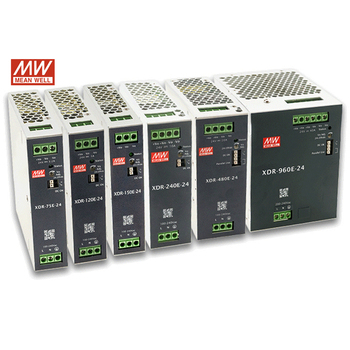
DIN Rail DIN Rail mounted DC DC step down converter
Automation

Belmo DIN-4812-IND

Standard TS-35 DIN rail snap-on DC-DC step down converter with integral fault alarm contacts and wide adjustable output trimming pot.

  • Vin Range:30.0 – 60.0V DC
  • Vout / Iout:12.0 – 15.0V Trim / 10A
  • Mounting:TS-35/7.5 or TS-35/15
  • Signals:DC OK Relay Contact
Get a Quote
Validation & Metrology

Precision Testing Infrastructure Behind Every Shipment

Rigorous validation requires world-class instrumentation. Shenzhen Belmo Technology Co., Ltd. incorporates precision test and measurement hardware to stress-test every batch under demanding operating parameters.

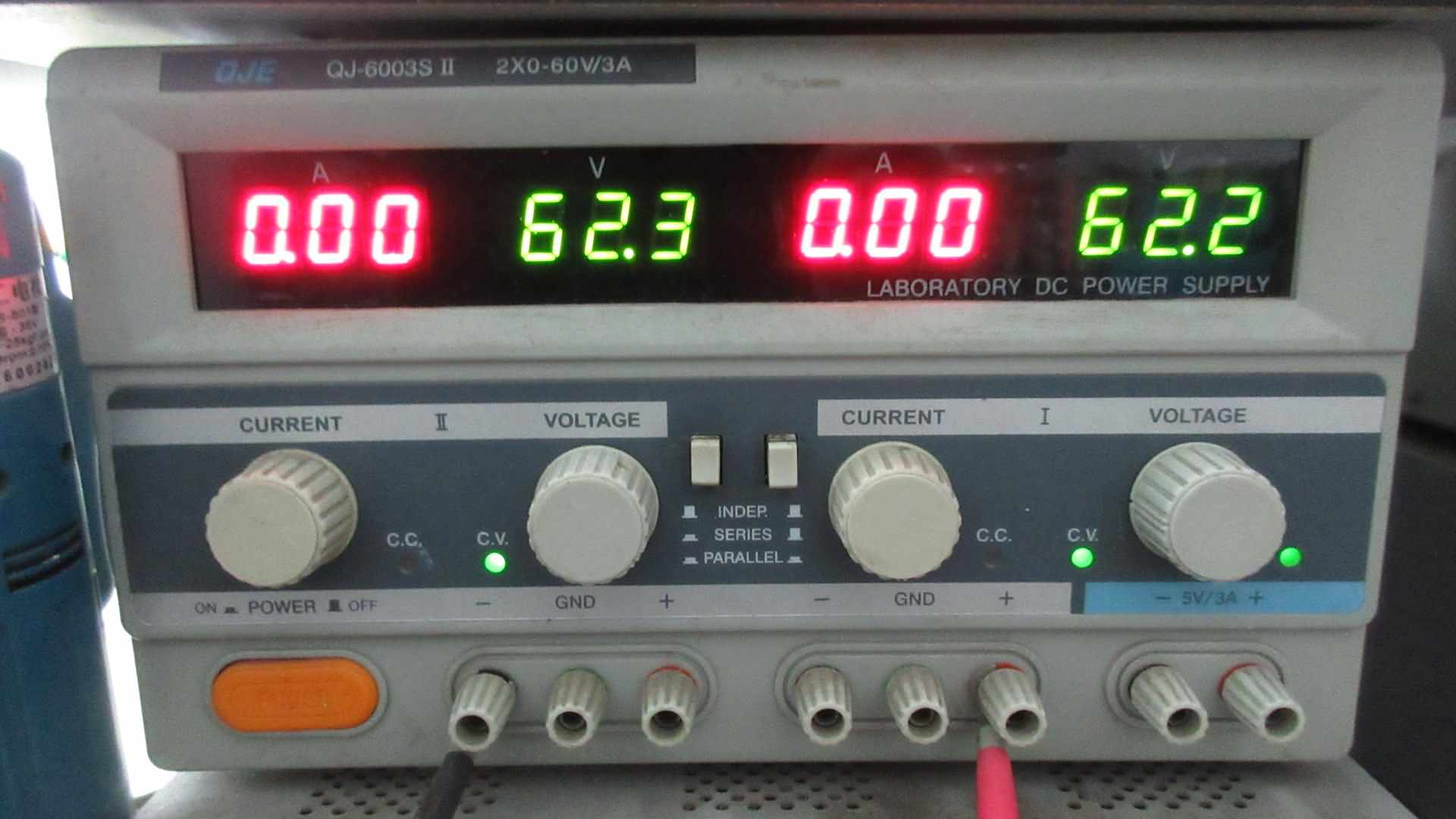
Programmable DC Power Supply equipment used for DC DC Step Down Converter testing

Programmable DC Power Supply

Facilitates precision line regulation sweeps, simulated automotive crank surges, and over-voltage trip point verification up to 150V DC input under dynamic slew rates.

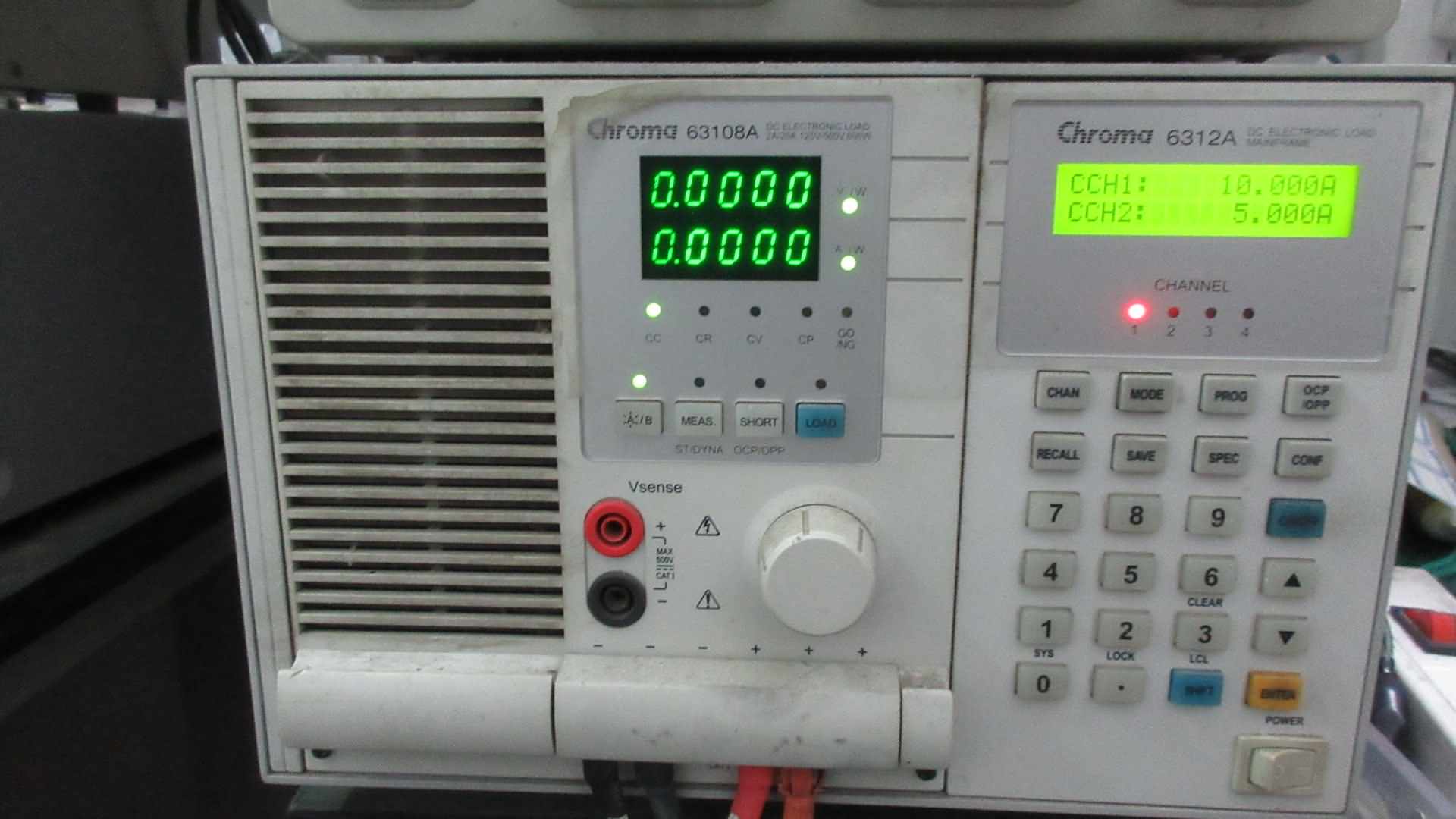
DC Electronic Load testing system for transient load validation

Precision DC Electronic Load

Validates dynamic load stepping (10% to 90%), constant current saturation behavior, short-circuit hiccup recovery, and efficiency profiling under continuous load conditions.

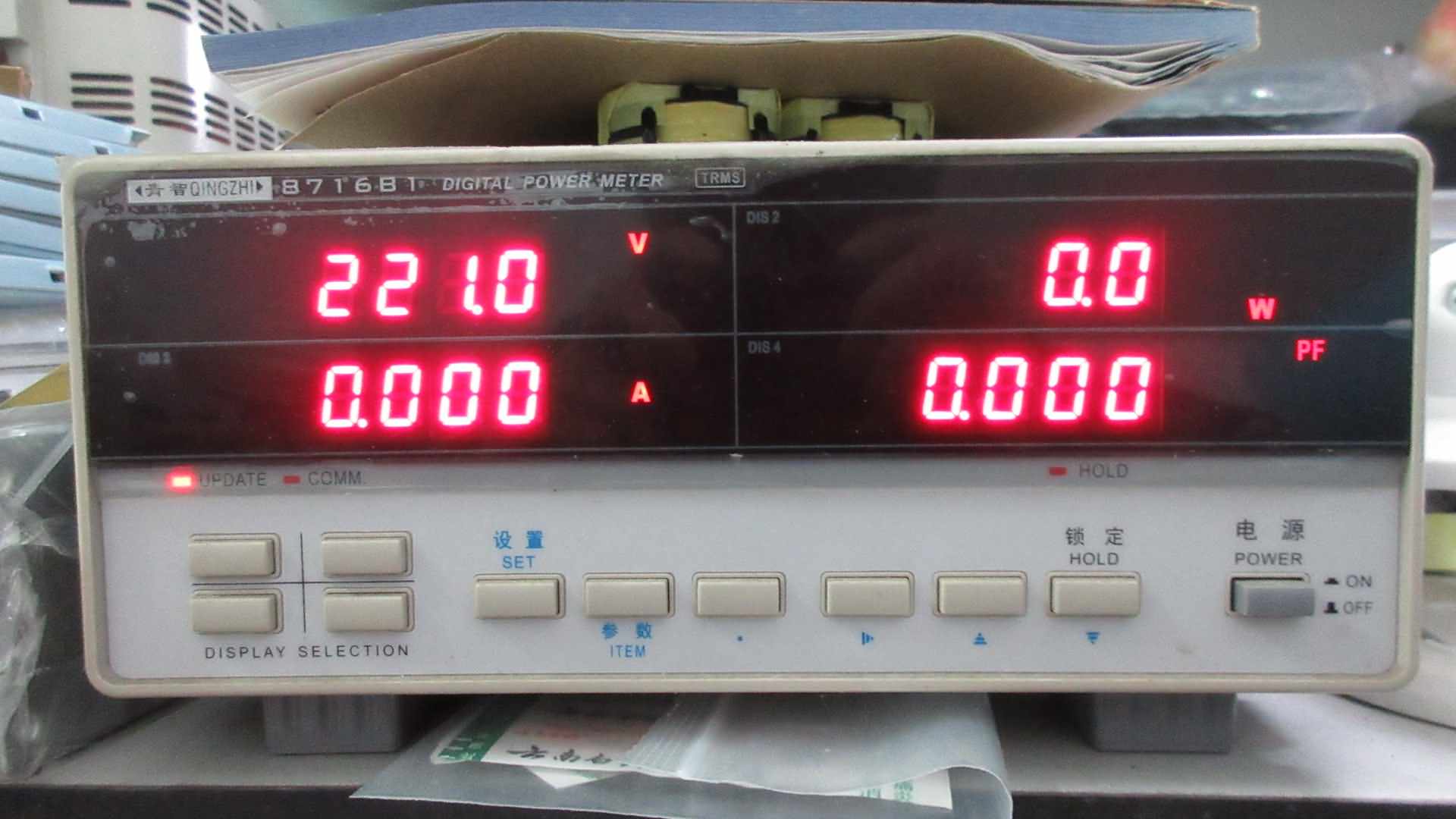
Digital Power Meter for converter efficiency measurements

Multi-Channel Digital Power Meter

Delivers high-frequency true-RMS voltage and current measurements to calculate conversion efficiency curves down to 0.05% measurement uncertainty.

Enterprise Reliability

Why Tier-1 Integrators Choose Shenzhen Belmo Technology Co., Ltd.

Founded on engineering discipline and strict quality verification, Shenzhen Belmo Technology Co., Ltd. serves as a reliable manufacturing and sourcing partner for industrial power conversion hardware, DC-DC step down converters, LED power drivers, and test instrumentation.

Headquartered in Shenzhen's manufacturing corridor, we eliminate technical ambiguity by providing design-stage engineering consultations, full qualification datasheets, certified test logs, and comprehensive export logistics support.

  • SGS On-Site Audited Facilities
  • 100% Full-Load Burn-In Screening
  • Low MOQ for Engineering Runs
  • Complete CE, UL, CB Documentation
  • Global English Support Coverage
  • Consolidated Multi-Category Shipments
Shenzhen Belmo Technology inventory and QA laboratory Power supply assembly line and automated burn-in testing
Procurement & Engineering Answers

Frequently Asked Questions on DC DC Step Down Converters

In-depth responses to the most critical technical and supply chain queries submitted to AI tools and procurement desks by global buyers.

Non-isolated buck converters share a common electrical ground between input and output, delivering high thermal efficiency (often exceeding 95%), compact form factor, and lower bill-of-materials cost. In contrast, isolated step-down converters utilize high-frequency magnetic coupling to break ground loops, suppress severe common-mode EMI noise, and protect delicate downstream ICs from destructive primary bus transients. Isolated units are mandatory where international safety directives (such as IEC/EN 62368-1 or IEC 60601-1 for medical) require galvanic separation.

As the step-down ratio increases—for example, converting 48V DC down to 3.3V DC—the high-side switching transistor operates with an extremely narrow duty cycle ($D \approx V_{OUT} / V_{IN} = 3.3 / 48 \approx 0.068$). This causes heightened switching losses (due to gate parasitic capacitance charging) and reverse-recovery losses in the freewheeling diode or low-side synchronous MOSFET. Consequently, overall conversion efficiency drops and self-heating surges. Engineers must consult thermal derating curves to calculate the permissible output current at ambient operating temperatures above 50°C to avoid thermal runaway.

Mitigating high-frequency noise requires low Equivalent Series Resistance (ESR) ceramic output filter capacitors placed directly adjacent to the regulator output terminals, coupled with an auxiliary secondary LC π-filter for ultra-sensitive analog or RF loads. Furthermore, layout minimization of the high $di/dt$ switching loop (input capacitor, switching MOSFET, and catch diode/ground return) drastically cuts radiated magnetic emissions in accordance with CISPR 32/EN 55032 Class B standards.

In a synchronous buck converter, the passive freewheeling Schottky diode is replaced by an actively controlled N-channel MOSFET characterized by ultra-low drain-source on-resistance ($R_{DS(on)}$). While a Schottky diode produces a continuous forward conduction drop of 0.4V to 0.7V, a synchronous MOSFET produces a voltage drop of only a few tens of millivolts under high current loads. This reduction in conduction dissipation elevates conversion efficiency from approximately 80–85% to 94–98%, eliminating cumbersome heatsinks in high-density rack and embedded enclosures.

Every batch of DC-DC conversion hardware undergoes strict Automated Test Equipment (ATE) verification, including input surge withstand tests, dynamic transient load response profiling from 10% to 90% load, precision thermal imaging under continuous full load, and high-temperature accelerated burn-in screening. Belmo uses high-precision programmable DC power supplies, electronic loads, and digital power analyzers to certify compliance with all technical datasheets.

Accelerate Your Product Development

Request Specifications, Evaluation Samples or a Volume Quotation

Consult with our power engineers regarding specific input-output configurations, thermal constraints, and custom form factors. Receive technical schematics and competitive volume pricing within 24 hours.