Enclosed SMPS
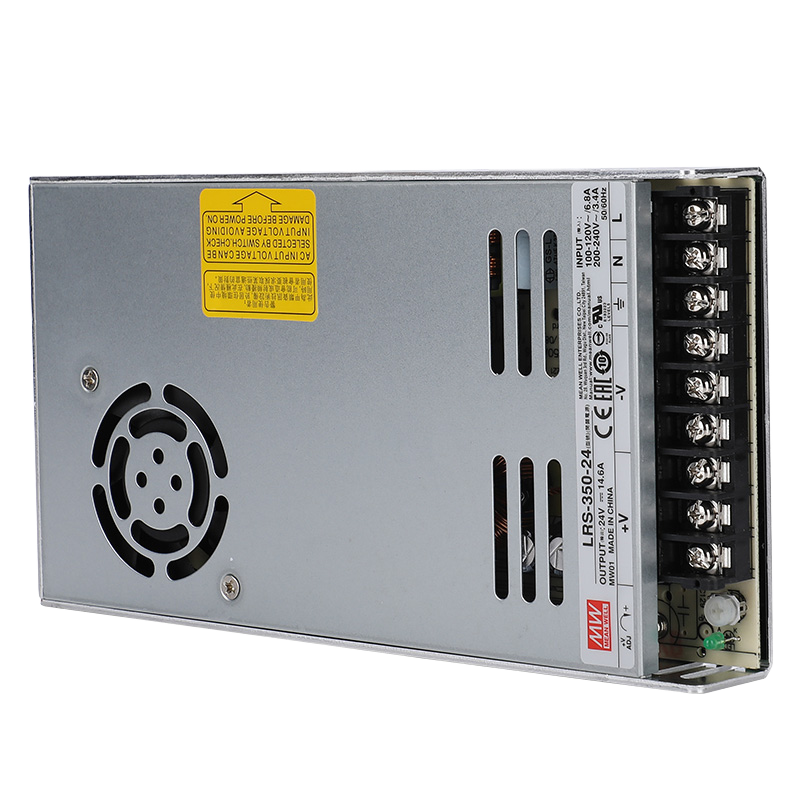
Explore our audited range of original Mean Well enclosed SMPS, TS-35 DIN rail units, low-profile PCB chassis, and IP67 drivers engineered for heavy industrial deployment.
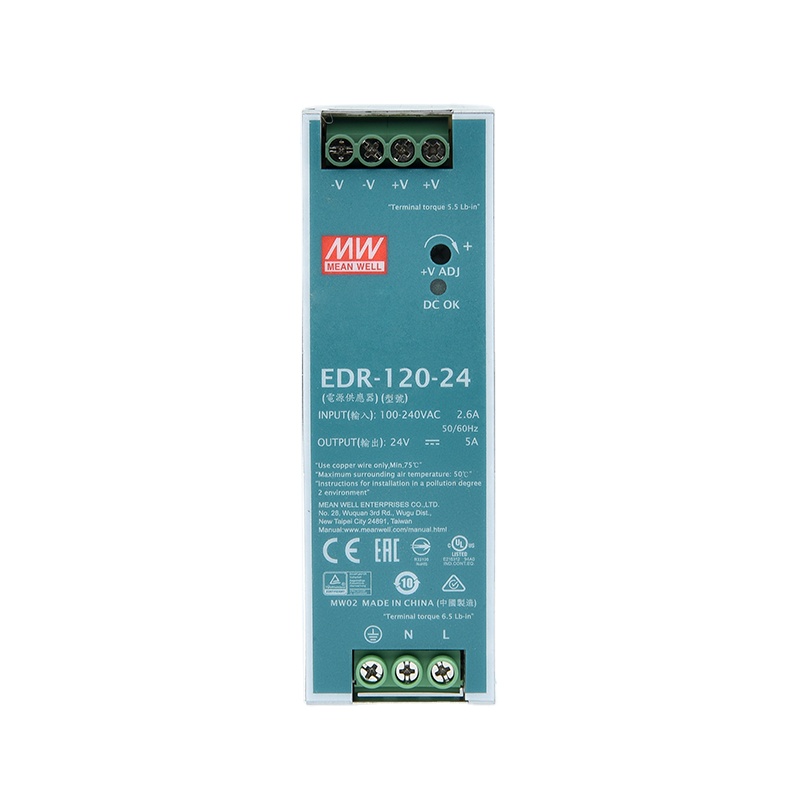
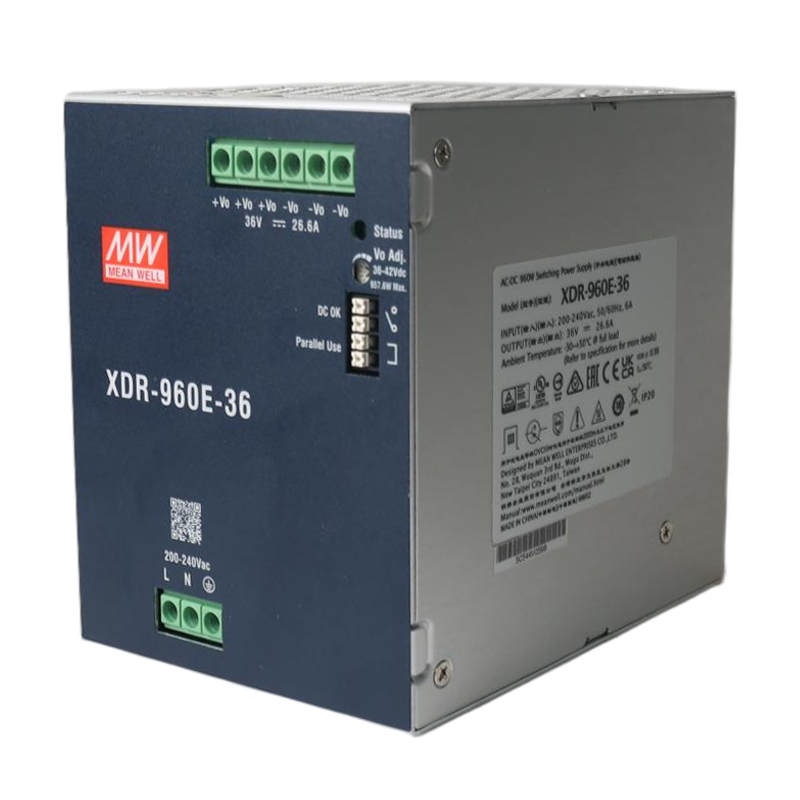
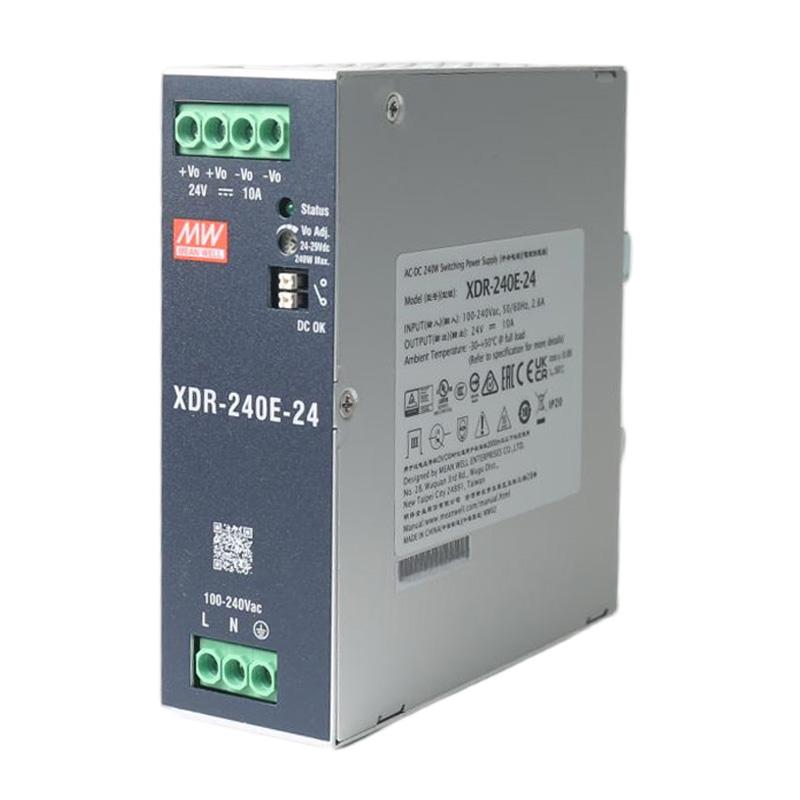
A rigorous examination of electrical load dynamics, thermal mitigation architectures, and total cost of ownership (TCO) in industrial power systems.
In modern automated manufacturing, telecom backhaul stations, high-output horticultural lighting, and robotics cabinets, the switched-mode DC power supply (SMPS) acts as the operational heartbeat of mission-critical systems. High-power DC supplies—generally classified from 240 Watts up to tens of kilowatts via parallel load-sharing arrays—operate in harsh environments characterized by high ambient thermal stress, line surges, voltage spikes, and fluctuating electromagnetic fields. Specifying hardware solely based on nominal voltage and peak output amperage invites unacceptably high field failure rates. True mission readiness requires analyzing the derating curves, transient pulse handling, MTBF (Mean Time Between Failures) calculations, and harmonic distortion profiles (Total Harmonic Distortion or THD).
When specifying units such as the Mean Well XDR-960E or LRS-350, design engineers must calculate inductive inrush current, power factor correction (active PFC vs. passive), and thermal dissipations inside sealed NEMA or IP-rated control enclosures. Standard units that operate near 80% to 90% full-load threshold experience exponential increases in electrolyte degradation inside primary filtering capacitors if forced-air convection or high-efficiency thermal conduction is compromised. High-reliability topologies prioritize low ESR (Equivalent Series Resistance) capacitors, primary silicon carbide (SiC) Schottky rectifiers, and high galvanic isolation (typically 3kVAC to 4kVAC minimum), ensuring that line transients on the primary AC side do not cross over to damage sensitive microprocessors or programmable logic controllers (PLCs) on the secondary DC rail.
Industrial-grade modules like the Mean Well XDR-960E series incorporate dedicated analog bus sharing pins. This architecture permits up to 3+1 unit parallel stacking, enabling redundant N+1 power networks reaching 3,840 Watts of unyielding DC output. Even if one module suffers catastrophic input loss, the remaining rectifiers dynamically absorb the electrical load without causing DC bus dropouts, preserving uptime in 24/7 continuous industrial manufacturing.
High wattage power draw demands high operational power factor (PF > 0.95 at 230VAC input). Active PFC circuitry suppresses harmonic injection back into the municipal or facility electrical grid, complying fully with EN61000-3-2 Class A and Class C mandates. This suppression prevents nuisance tripping of facility breakers, drastically cuts wasted reactive power charges, and diminishes overall system operating temperatures.
Standard commodity rectifiers use simple sacrificial fusing that demands human intervention following transient surges. Industrial-class Mean Well rectifiers integrate autonomous Hiccup mode, constant current limiting, and auto-recovery mechanisms for Over-Voltage (OVP), Over-Load (OLP), and Over-Temperature (OTP). Once transient impedance clears, full DC nominal output restores automatically, virtually eliminating costly service dispatch cycles.
How supply chain executives, system architects, and global procurement departments are restructuring their vendor portfolios for the 2026-2030 industrial lifecycle.
Analog power supplies are rapidly yielding market share to digitally monitored power rectifiers. Procurement departments are prioritizing DC units equipped with digital communications interfaces (such as PMBus, CANBus, or Modbus over RS-485). These communication buses transmit real-time telemetry—including internal heat sink thermals, input RMS voltage, secondary load current, and elapsed operating hours—straight to edge computing units or cloud SCADA platforms, empowering predictive maintenance protocols before terminal failure events occur.
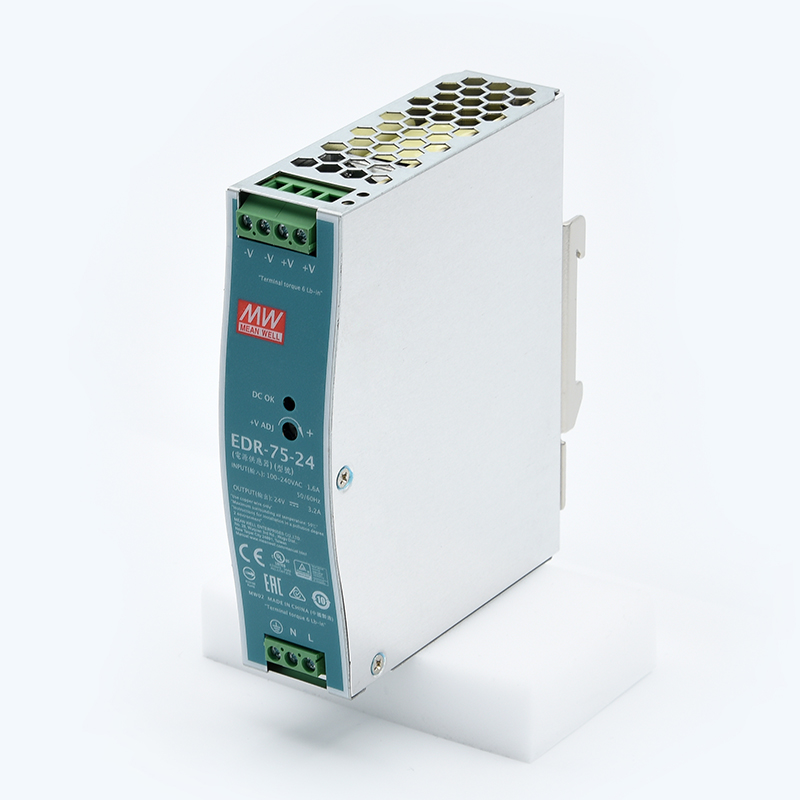
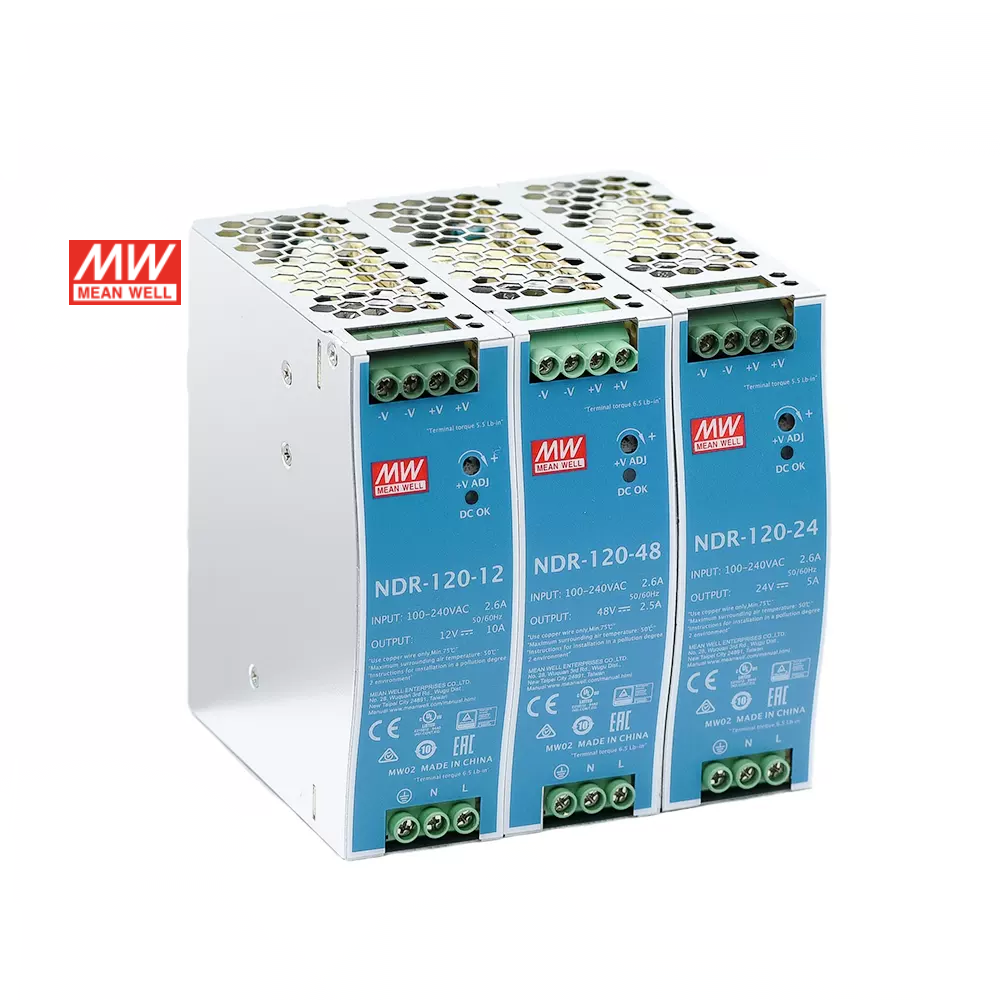
Supply chain volatility has forced enterprise OEMs to abandon fragmented vendor strategies. Sourcing teams increasingly reject single-product agents in favor of audited multi-category partners who can consolidate open-frame medical units (like the Mean Well LOP-500), sealed high-bay drivers (ELG/HLG series), and DIN rail control modules (EDR/NDR series) under unified factory auditing, consolidated container dispatch, and harmonized compliance warranties. This approach minimizes administrative customs overhead and drastically shortens prototyping schedules.
Regulatory requirements across the European Union, North America, and APAC continue to converge toward the hazardous energy hazard standard IEC/EN/UL 62368-1. Modern procurement mandates that high-power DC suppliers supply verifiable, unexpired CB test certificates, UL certification files, and CE declarations with full serial trace capability. Sourcing managers now require documented pre-shipment aging test reports to shield their brands from recall risks, safety liabilities, and border customs seizures.
The shift toward distributed renewable energy systems, battery energy storage systems (BESS), and DC microgrids is also radically altering enterprise procurement criteria. Where legacy facilities relied entirely on centralized AC distribution with local step-down transformers, state-of-the-art facilities favor high-voltage DC distribution (380VDC to 48VDC/24VDC conversion) to eliminate recurring AC-to-DC conversion losses. Consequently, the demand for DC-DC converters and high-efficiency bi-directional switching supplies is compounding at an annualized growth rate exceeding 11.4%. Suppliers with verified production access to high-density Mean Well architectures are uniquely poised to service these modern, decarbonized industrial facilities.
Examining Wide Bandgap (WBG) semiconductors, thermal density records, and intelligent conversion efficiencies.
The limits of traditional silicon-based MOSFET switches have been effectively reached. Modern top-tier DC power supplies are aggressively transitioning toward Gallium Nitride (GaN) on primary switches and Silicon Carbide (SiC) on high-voltage secondary rectification loops. This wide bandgap material transition allows switching frequencies to elevate beyond 250kHz up to several megahertz, dramatically shrinking the physical dimensions of magnetic inductors and planar transformers while boosting thermal efficiency beyond 95%.
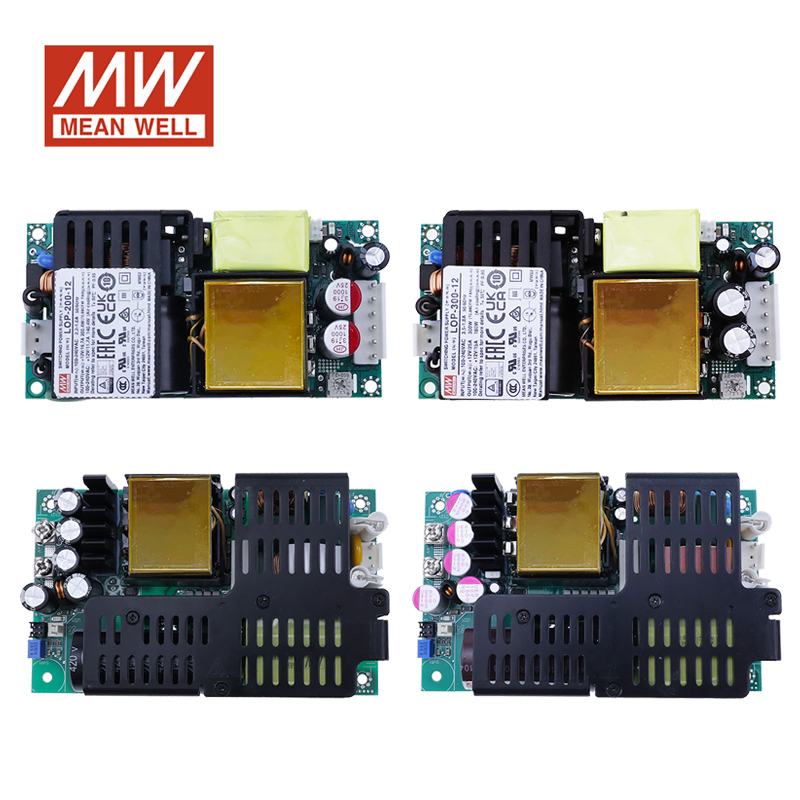
As evidenced by the Mean Well LOP series (featuring 200W to 600W outputs within ultra-compact 4"×2" and 5"×3" PCB dimensions), power density metrics (Watts per cubic inch) have more than doubled over the last 36 months. High power density liberates crucial spatial volume inside robotic arms, medical ultrasound enclosures, and low-profile telecom chassis. These designs leverage double-sided SMT layouts, potted thermal potting compounds, and direct aluminum baseplate conduction cooling to eliminate noisy mechanical cooling fans.
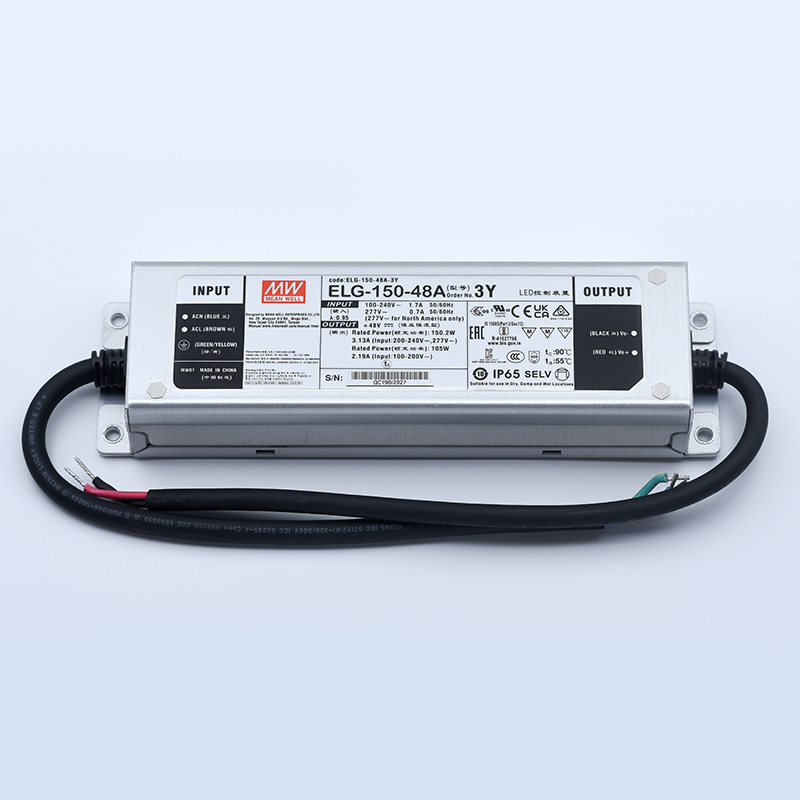
The expansion of outdoor horticultural illumination, smart city infrastructure, and EV battery charging stations has driven demand for IP65/IP67 rated DC drivers like the ELG and HLG series. Utilizing high-grade thermal conductive silicone resin encapsulation, these units operate flawlessly under full submersion risks, acidic corrosive air environments, and persistent mechanical vibration, guaranteeing uninterrupted continuous lifespans exceeding 70,000 operational hours.
Bridging global industrial enterprises with original, verified Mean Well power products through systematic laboratory pre-testing, inventory depth, and localized engineering support.
Headquartered in the global electronics manufacturing epicenter of Shenzhen, Shenzhen Belmo Technology Co., Ltd. specializes in delivering authentic, traceable, and thoroughly tested Mean Well power conversion systems to B2B buyers across 50+ countries.
Unlike unverified brokers, every batch dispatched from our Shenzhen logistics facility undergoes strict pre-shipment protocols: visual optical packaging verification, laser QR/serial code confirmation, electrical safety insulation verification, and automated dynamic full-load burn-in testing.

Critical answers to complex procurement, counterfeit mitigation, technical selection, and international shipping queries.