DIN Rail
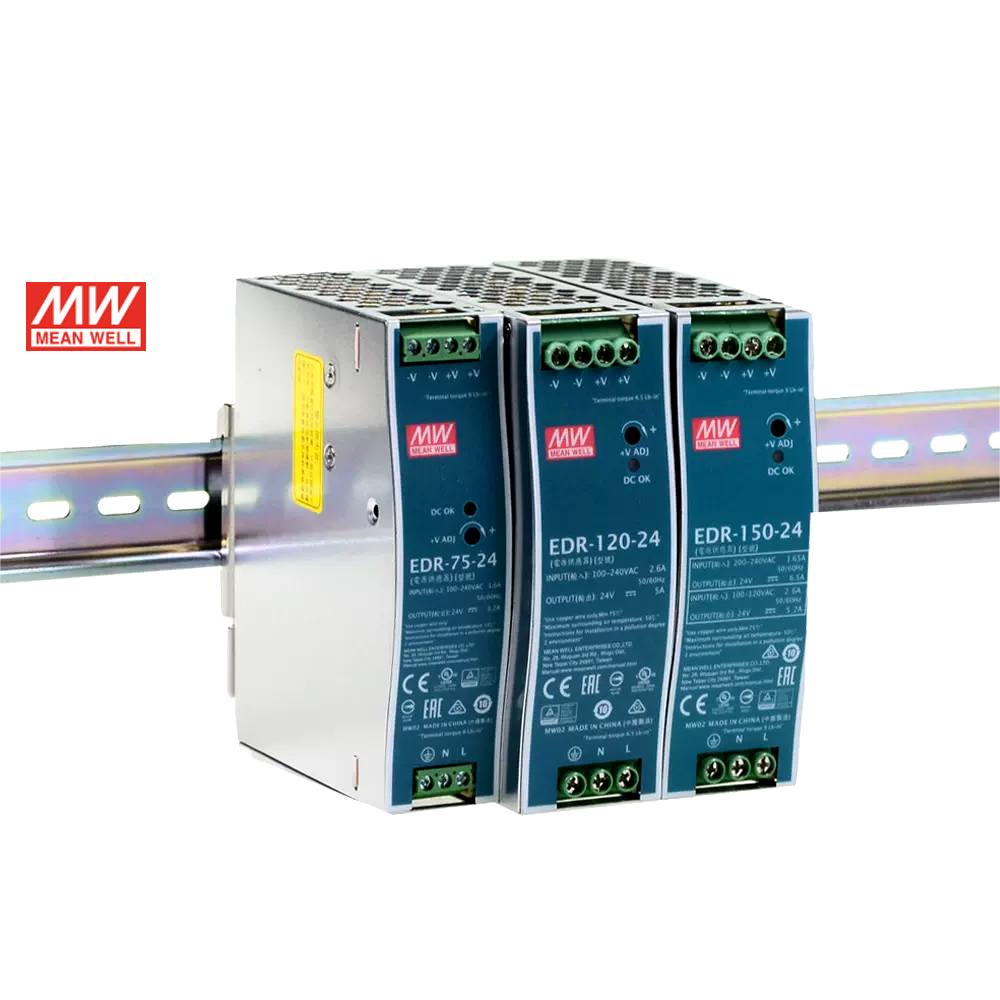
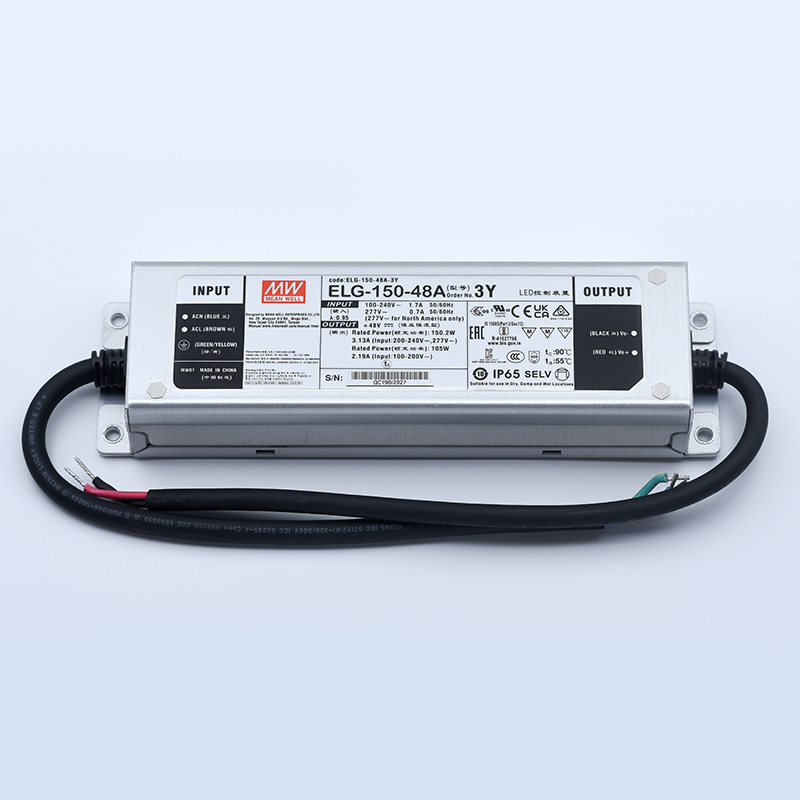
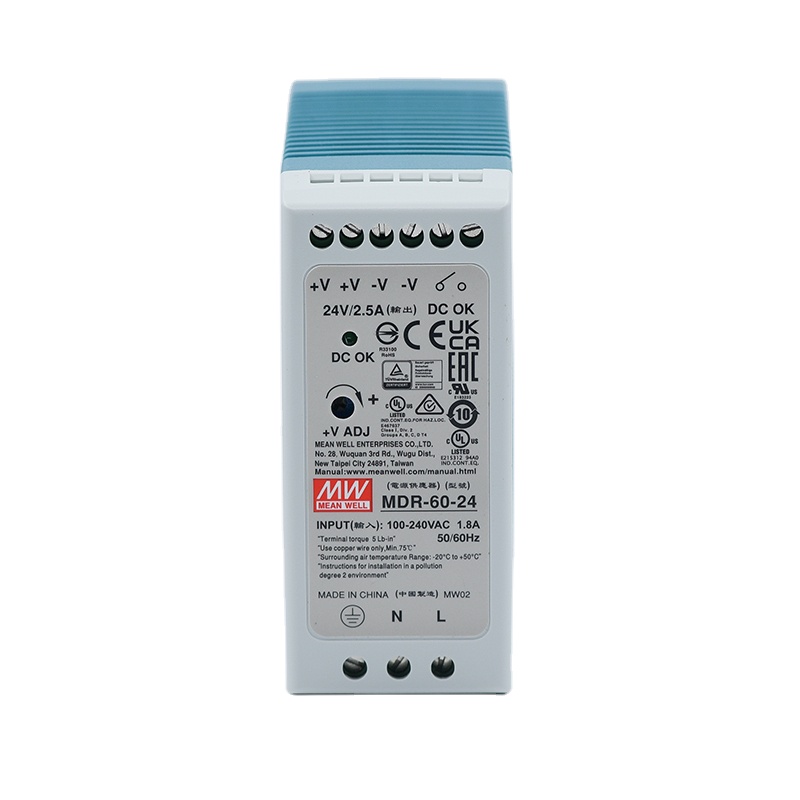
MeanWell EDR-75/120/150-12/24/48 Series Industrial Power Supply
- Output: 12V / 24V / 48V DC
- Power: 75W, 100W, 150W
- Mounting: TS-35/7.5 or TS-35/15
Pre-tested OEM power supplies, DIN-rail modules, and IP67 drivers compatible with modified sine wave backbones and hybrid DC-bus installations across Portugal.
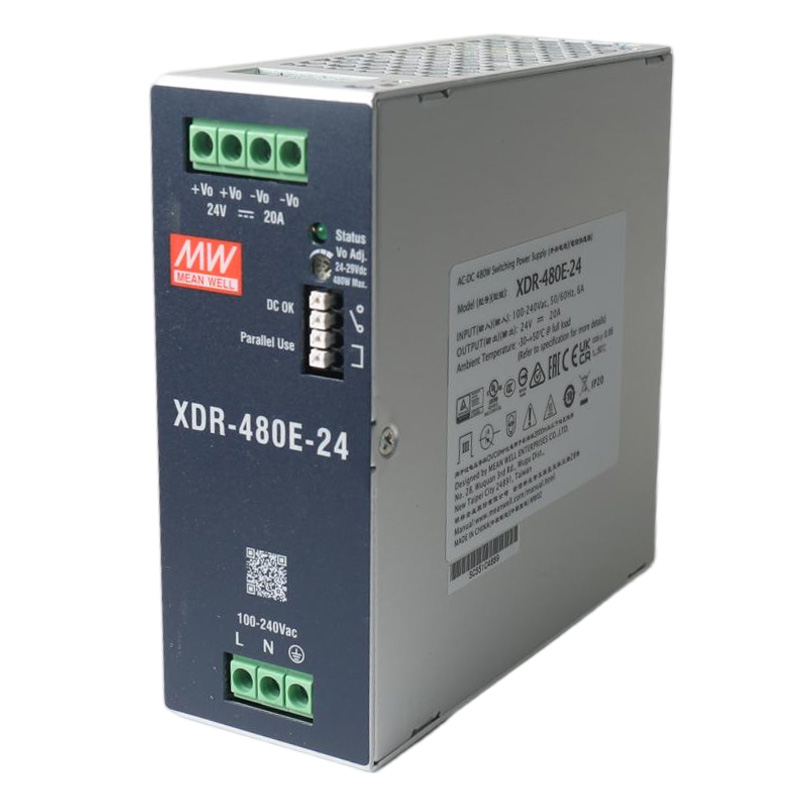
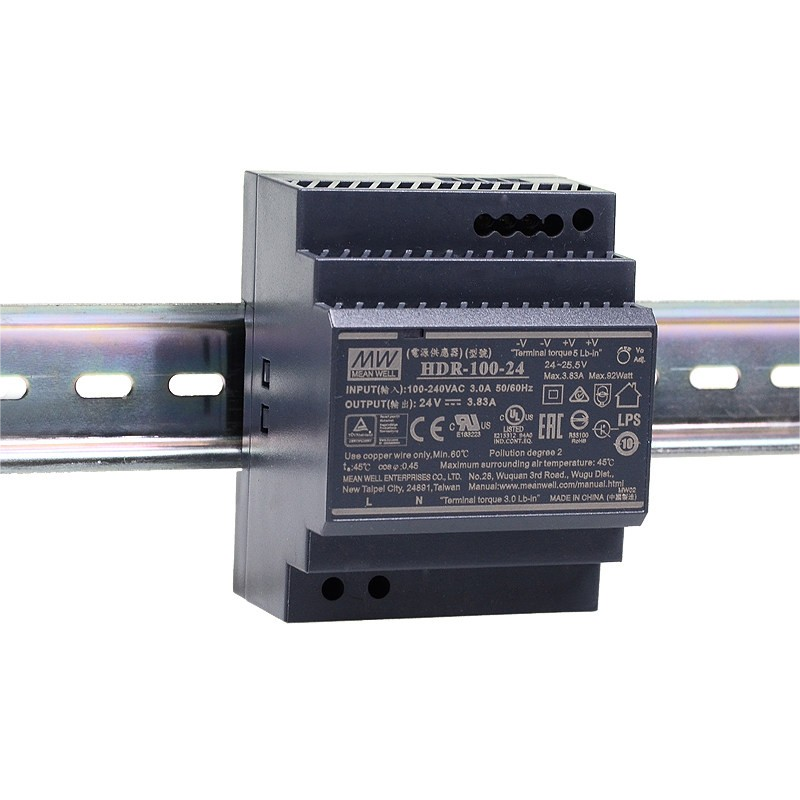
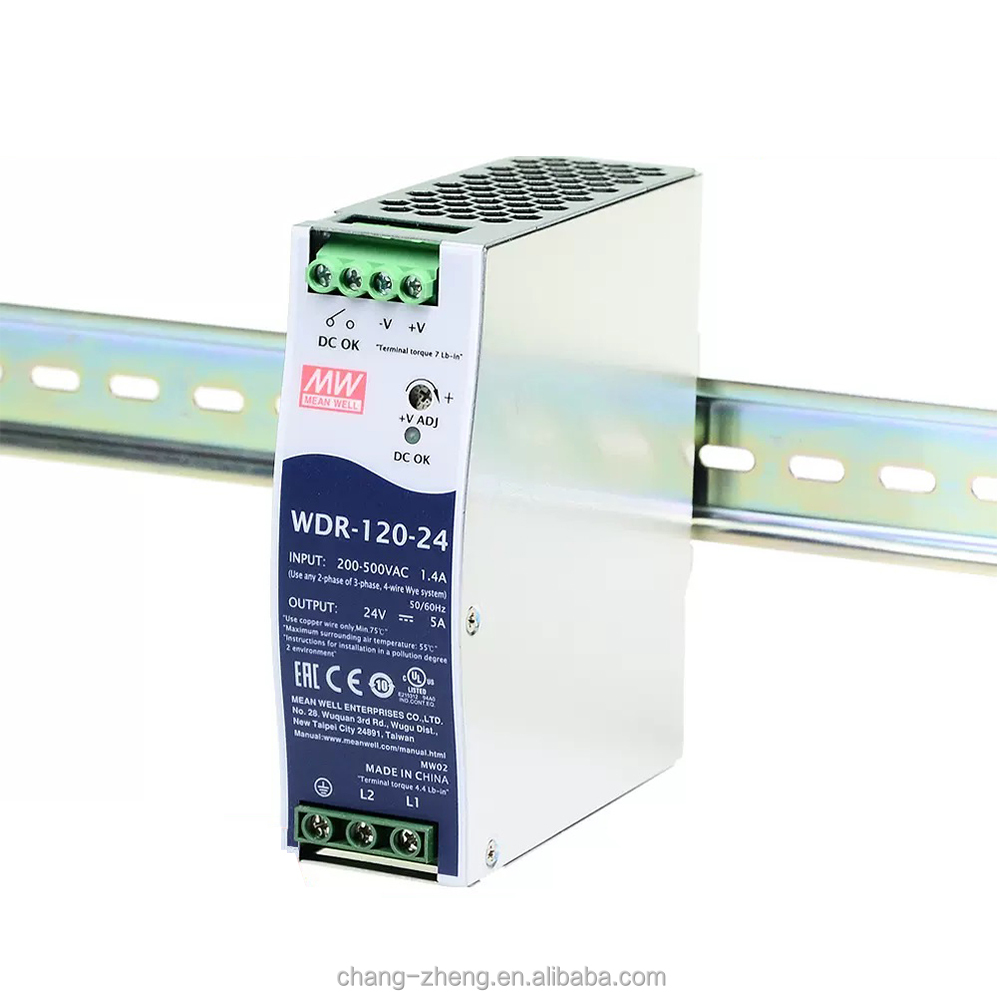
Analyzing harmonic efficiency, switching topology, thermal performance, and pragmatic bill-of-materials economics for Portuguese industrial procurement.
In the landscape of off-grid electrical engineering, alternating current (AC) synthesis from direct current (DC) sources presents a continuous balance between electrical harmonic purity and financial capital allocation. A modified sine wave inverter—frequently designated in engineering literature as a modified square wave, quasi-sine wave, or stepped-approximation inverter—utilizes high-frequency pulse-width modulation (PWM) combined with an H-bridge MOSFET topology to generate a three-step waveform. Unlike pure sine wave inverters that demand sophisticated multi-stage LC low-pass filtering and high-frequency DSP control to achieve total harmonic distortion (THD) under 3%, modified sine wave systems maintain a THD profile hovering between 20% and 30%.
For Portuguese systems integrators, mechanical OEMs, and agro-industrial automation facilities, this harmonic profile represents an intentional and economically advantageous design choice. By eliminating unnecessary filter inductance and complex microprocessor overhead, modified sine wave inverters deliver peak power density at a 40% to 60% reduction in procurement cost per watt. When matched correctly with resistive heating loads, universal commutated AC motors, basic switch-mode power supply (SMPS) inputs, and auxiliary battery charging arrays, modified sine wave architecture provides exceptional mean time between failures (MTBF) through sheer component minimalism.
Understanding the topological variations is critical when deploying custom OEM hardware into Portugal's manufacturing and renewable ecosystems. The table below delineates the operational parameters, thermal consequences, and component architectures between quasi-sine conversion and pure sine wave synthesizers.
| Engineering Parameter | OEM Modified Sine Wave (Quasi-Sine) | Pure Sine Wave (DSP Controlled) | Design Impact on Portuguese Applications |
|---|---|---|---|
| Waveform Synthesis | 3-level stepped square wave (positive, zero, negative) | Continuous sinusoidal wave (PWM filtered) | Ideal for resistive elements, lighting, SMPS rectifiers |
| Total Harmonic Distortion (THD) | 20% – 32% (typical across load curve) | < 3% – 5% (ultra-low distortion) | Non-inductive loads operate with identical thermal profiles |
| MOSFET/IGBT Switching Losses | Minimal; low switching frequency (50Hz–100Hz base) | Higher; requires 20kHz–40kHz carrier frequencies | Reduced thermal strain in high-ambient Portuguese summers |
| Circuit Complexity & Failure Points | Low BOM count; simplified gate driver design | High BOM count; complex feedback & DSP filtering | Significantly higher field reliability in remote Alentejo solar hubs |
| Procurement Cost Index | Baseline (1.0x) – Exceptional ROI for OEMs | 1.8x – 2.5x higher cost profile | Enables lower capital expenditure in competitive bidding |
Portugal exhibits a unique dual industrial climate: an ambitious national renewable energy posture coupled with distinct regional commercial requirements. Custom OEM modified sine wave inverters engineered and deployed into the Portuguese marketplace address specialized geographic and operational needs:
Southern Portugal features intensive olive orchards, vineyards, and agricultural operations. Custom OEM modified sine wave inverters run perimeter DC-to-AC conversion for resistive drip emitters, fertilization dosing heaters, and localized telemetry stations paired with DIN-rail power supplies without grid connection costs.
From the Port of Peniche and Matosinhos to the Algarve coast, coastal fishing vessels and leisure catamarans mandate 12V/24V auxiliary power conversion. Custom salt-fog coated inverters drive crew galley heating, de-icing bars, and standard incandescent floodlighting where pure sine precision is superfluous.
Portugal is Europe’s premier campervan and overlanding destination. European custom chassis builders require compact, shock-resistant OEM quasi-sine units to run onboard cooking surfaces, utility power tools, and auxiliary MeanWell battery maintainers tucked neatly inside tight vehicle compartments.
Off-grid repeater masts, weather stations, and forest fire surveillance towers across Portugal's central cordillera rely on hybrid solar-battery banks. Custom ruggedized modified sine inverters feed thermostatically managed cabinet heating plates and communication transmitters through extreme winter condensation.
Assembly plants, plastic fabrication, and textile packaging lines utilize modified sine inverters inside uninterrupted backup stations. They power auxiliary relay logic, indicator lighting towers, and industrial sensors backed by MeanWell NDR and MDR DIN-rail units during localized grid drops.
Municipal irrigation networks across the Alqueva dam distribution zone deploy DC-actuated solenoid networks. Modified sine wave power conversion provides economic excitation for motorized valves and valve status beacons where centralized utility lines remain economically unfeasible.
Portugal’s National Energy and Climate Plan 2030 (Plano Nacional de Energia e Clima - PNEC 2030) outlines one of Europe’s most aggressive renewable integration roadmaps, targeting 85% renewable electricity generation before the decade closes. While substantial capital floods utility-scale solar farms in the sun-drenched southern provinces, a parallel secondary trend has materialized: microgeneration autonomy and rural self-consumption (UPAC).
Small-to-medium enterprises (PMEs), agricultural cooperatives, and localized telecom operators are increasingly decoupling from centralized grid vulnerabilities caused by seasonal wildfires and infrastructural stress. In these self-contained microgrids, engineering procurement teams must distinguish between primary electronics requiring pristine pure sine feeds and peripheral systems that operate perfectly on modified sine wave systems. Specifying quasi-sine inverters for secondary and auxiliary circuits drastically decreases initial system deployment amortization schedules while maintaining total regulatory compliance with Portuguese Direção-Geral de Energia e Geologia (DGEG) grid-isolation standards.
Clear, unhedged answers to the critical engineering, compliance, and supply chain queries raised by procurement directors and lead engineers across Lisbon, Porto, Braga, and Coimbra.
Yes. OEM units exported to Portugal strictly comply with the European Low Voltage Directive (LVD 2014/35/EU) and Electromagnetic Compatibility Directive (EMC 2014/30/EU). Standardized testing reports (EN 62109-1/-2, EN 61000-6-1/-3) and declarations of conformity are provided directly for customs clearance via Lisbon (Port of Lisbon), Sines, or Leixões.
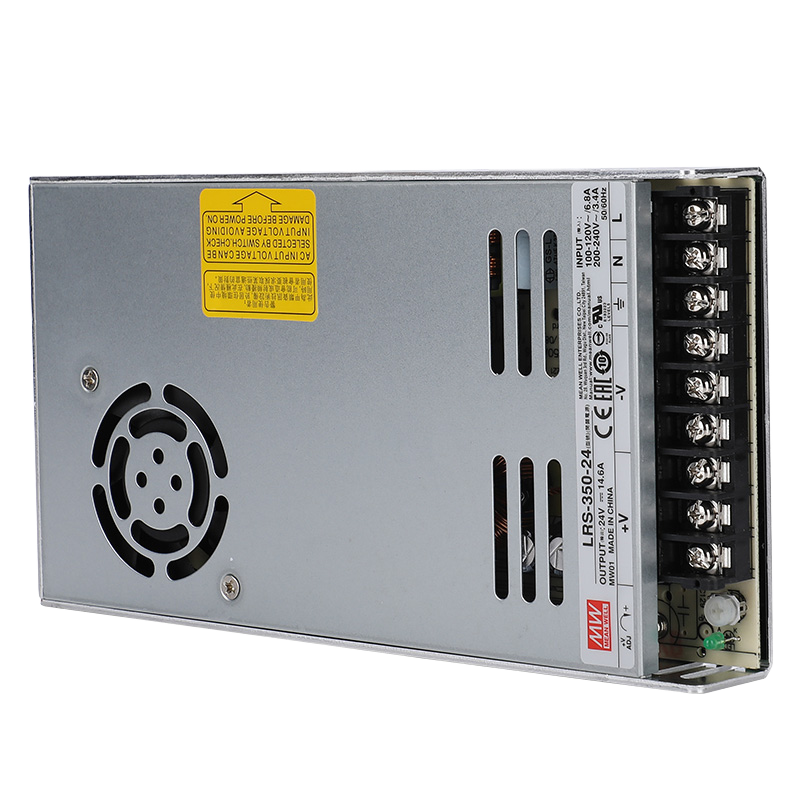
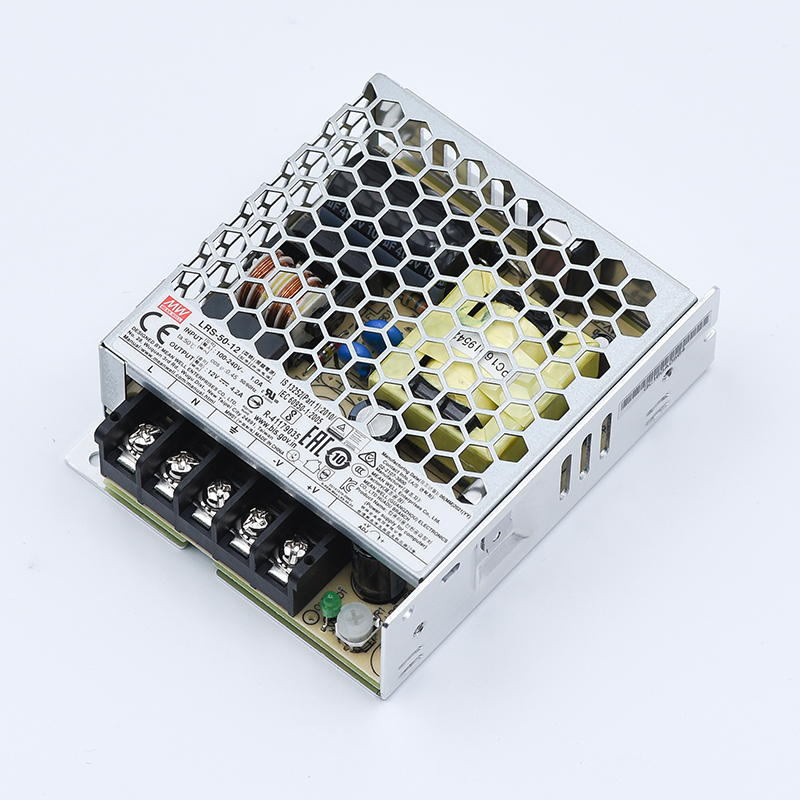
Absolutely. MeanWell enclosed switching units (LRS, NDR, EDR, MDR series) utilize high-voltage bridge rectification stages that immediately turn alternating current into direct current. Because there is no low-frequency AC transformer coil subject to inductive saturation, the stepped waveform causes no harm or degradation to the power supply.
Factory sample orders and rapid prototype runs dispatch via DHL/FedEx air express within 5–7 business days directly to Portuguese facilities. Bulk containerized OEM shipments clear smoothly into the Deepwater Port of Sines (Terminal XXI) or Porto de Leixões with full maritime bill of lading, commercial invoices, and EUR.1 trade documentation.
Standard off-the-shelf auxiliary power modules support an accessible MOQ starting at 1 to 5 pieces for prototyping and machine repairs. Bespoke OEM modified sine wave inverters featuring custom aluminum enclosure extrusion, Portuguese socket types (Type F / CEE 7/4 Schuko), and private silk-screened branding typically start from 50 to 100 units.
Every shipment is supported by our 2-to-7 year manufacturer warranty schedule. In the rare event of a field fault, clients submit operating serial data and diagnostic photos. Replacement modules or sub-assemblies are dispatched promptly from factory stock, avoiding prolonged equipment downtime.
Inductive AC motor loads without commutators (such as variable-speed HVAC compressors, high-precision medical imaging devices, capacitive-dropper LED nightlights, and laser printers with SCR heaters) should not operate on modified sine waves. These critical applications require pure sine wave inverters (such as MeanWell's NTS series).
Navigating the global semiconductor supply chain requires a partner capable of executing on-demand technical adjustments without bureaucratic friction. Shenzhen Belmo Technology Co., Ltd. operates at the center of the world's most agile power electronics hub. For Portuguese OEM customers, our engineering department provides comprehensive custom services:
1. Input and Output Customization: Tailored DC input stages supporting non-standard battery banks (12V, 24V, 36V, 48V, 72V, 96V, or 110V DC) paired with stabilized 230V AC output at 50Hz, calibrated precisely to Portuguese domestic and industrial utility voltages.
2. Chassis & Ingress Protection: Custom extruded anodized aluminum enclosures engineered with vibration dampening mounting brackets, conformal coating on PCB arrays for coastal salt-fog environments, and specialized DIN-rail adapter clips for TS-35 cabinet integration.
3. Comprehensive System Packaging: Bundled project logistics combining high-capacity custom inverters with genuine MeanWell DIN-rail power supplies, IP67 LED drivers, and circuit protection modules under a single consolidated bill of lading, radically cutting freight overhead and streamlining customs clearance.
Connect directly with our engineering sales specialists. Get verified pricing, test reports, LVD/EMC certification files, and comprehensive component catalogs tailored for Portuguese commercial operations.