Featured MEAN WELL Power Conversion Units & Front-End Regulators
Fully authenticated, factory-tested switching units and step-down/step-up companion stages engineered to operate alongside high-density non-isolated DC-DC converters across Dominican Republic industrial networks.
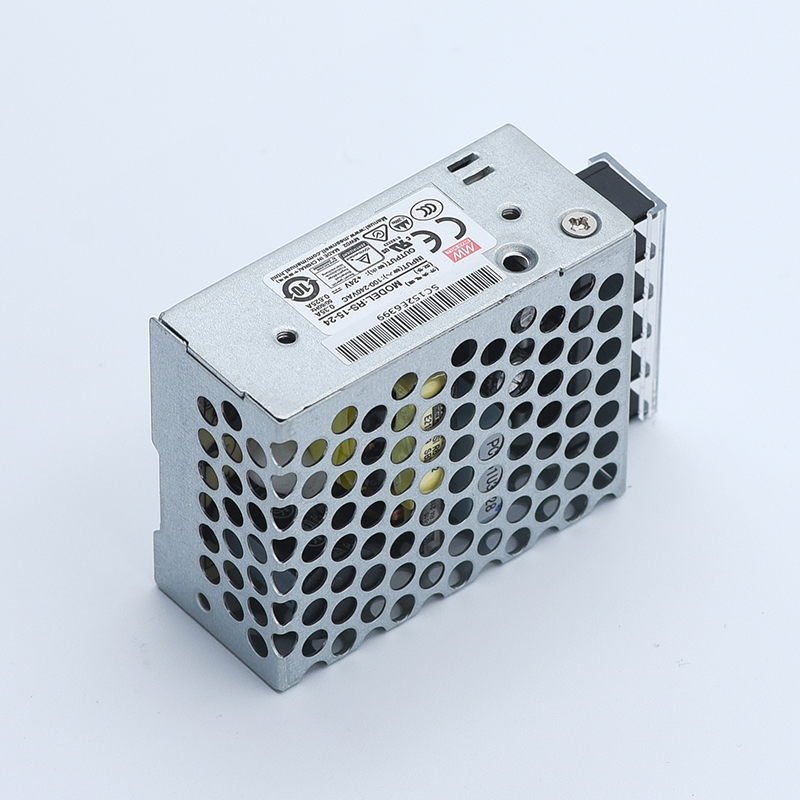
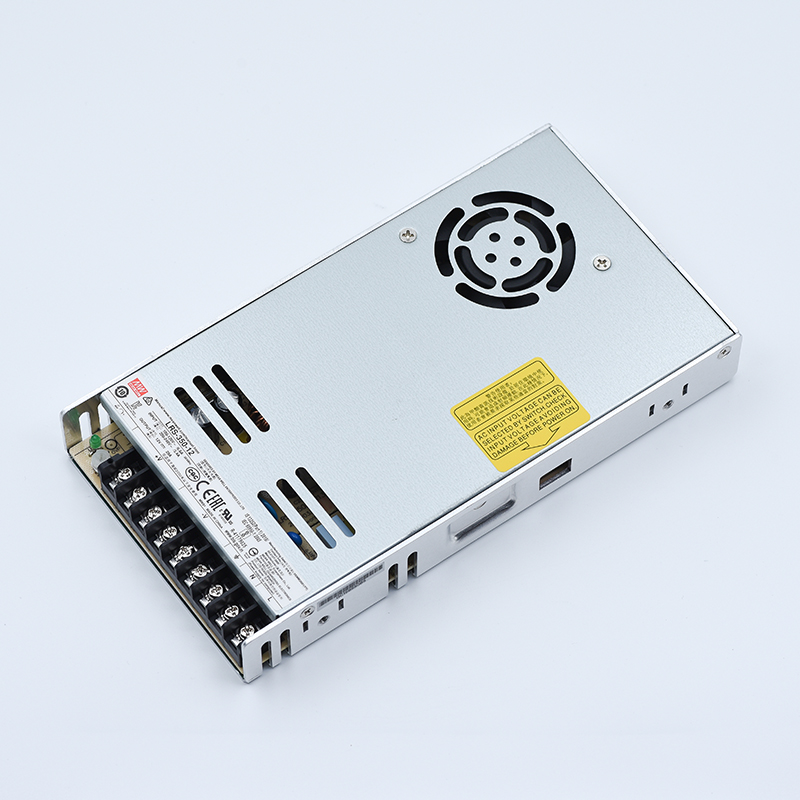
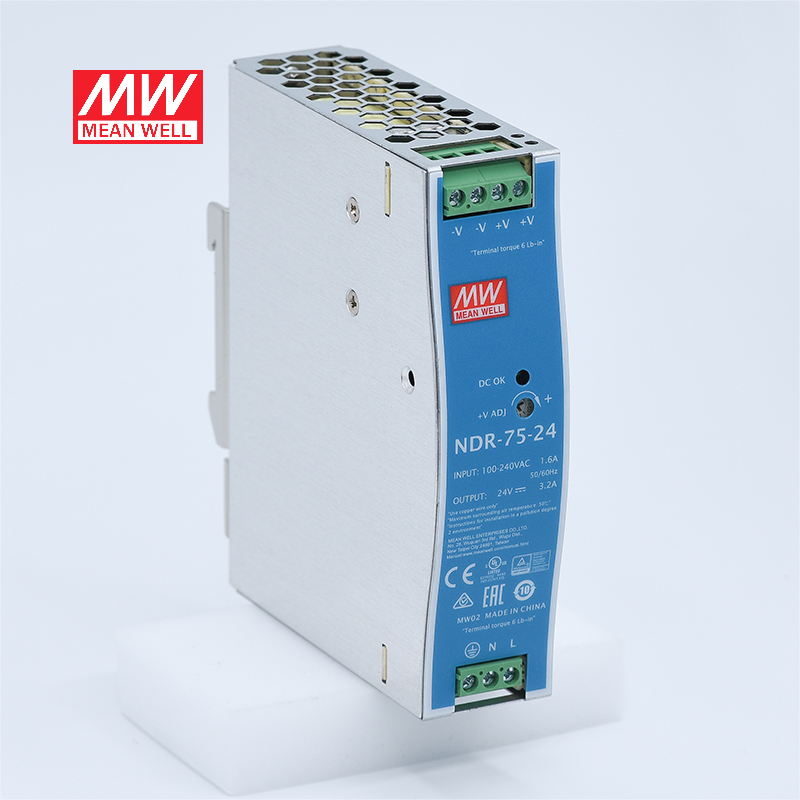
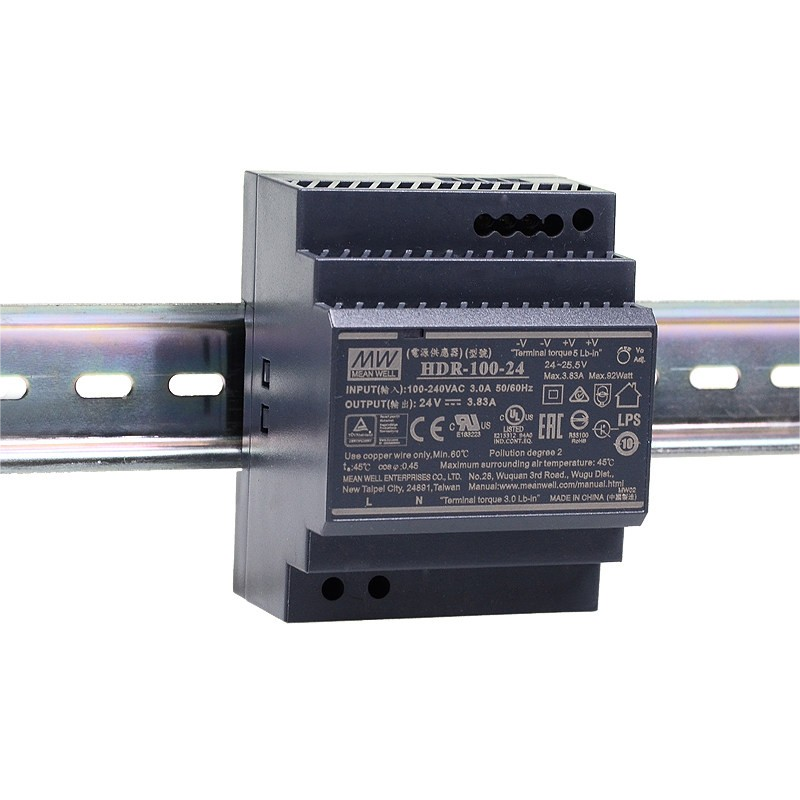
Engineering Non-Isolated DC-DC Architectures: Buck, Boost, and Synchronous POL Regulations
In modern industrial electronics, conversion efficiency, package thermal density, and localized line regulation dictate the stability of micro-controllers, actuators, and communication backplanes. Unlike galvanic isolation topologies that implement heavy planar or wire-wound transformers to break ground continuity, non-isolated DC-DC converters share a common electrical return path (Common Ground) between the primary input and the regulated output. By dispensing with bulky magnetic barriers and optical feedback loops, non-isolated synchronous buck and boost converters deliver outstanding efficiency—frequently surpassing 96% to 98%—while shrinking PCB space requirements by up to 60%.
For plant instrumentation managers, automation system integrators, and OEM engineers operating within the dynamic manufacturing ecosystem of San Pedro de Macorís, Dominican Republic, specifying the proper non-isolated DC-DC topology resolves crucial power conversion challenges. Whether dropping a 48V telecom/battery rail down to a localized 24V or 12V intermediate bus, or stepping down an intermediate 12V bus to ultra-sensitive 5V, 3.3V, or 1.8V Point-of-Load (POL) logic inputs, non-isolated switching regulators eliminate the heat build-up associated with linear dropout regulators (LDOs) and the acoustic/magnetic EMI penalties typical of older isolated converters.
Synchronous Buck Step-Down
Replaces traditional freewheeling Schottky diodes with low RDS(on) N-channel power MOSFETs. Minimizes conduction losses ($P_{cond} = I^2 \cdot R_{DS(on)}$), maintaining extreme conversion efficiency under high ambient temperatures without requiring forced convective airflow.
Non-Isolated Boost (Step-Up)
Essential for auxiliary power lines where DC bus droop is problematic over long cable runs. Boosts unstable 12V or 24V battery/sensor buses up to fixed 28V, 36V, or 48V lines to power heavy industrial solenoids, high-draw valves, and remote wireless transmitters.
Wide-Input Buck-Boost
Delivers seamless voltage stabilization when dealing with battery bank discharge profiles or variable solar photovoltaic strings. Maintains fixed 12V or 24V output whether the incoming DC bus swings below (e.g., 9V) or well above (e.g., 36V) nominal thresholds.
Topological Comparison: Non-Isolated POL vs. Isolated Converter Topologies
| Performance Metric | Non-Isolated Synchronous Buck | Standard Isolated Flyback | Engineering Advantage in Local Panels |
|---|---|---|---|
| Peak Thermal Efficiency | 94% – 98.5% | 82% – 89% | Generates up to 70% less internal cabinet heat; reduces enclosure cooling loads in tropical humid climates. |
| Galvanic Isolation Barrier | None (Direct Common Ground) | 1.5kV to 3kV AC Optical/Magnetic | Non-isolated units are ideal when grounding loops are eliminated and system ground reference is uniform. |
| Form Factor / Power Density | Ultra-compact SMD, SIP, or chassis mount | Bulkier magnetic core footprint | Allows mounting directly adjacent to microcontrollers and high-speed FPGAs on dense automated assembly lines. |
| Transient Load Response | Ultra-fast (15 to 45 µs recovery) | Moderate (150 to 500 µs recovery) | Ensures clean voltage rails during rapid high-current step transients in medical robotic pick-and-place systems. |
| Relative Bill of Materials Cost | Lower (Fewer magnetic components) | Higher (Transformer, optocouplers, Y-caps) | Substantially lowers procurement and replacement budgets for free zone assembly operations. |
Industrial Integration Across San Pedro de Macorís Facilities
San Pedro de Macorís represents one of the Dominican Republic's most vital industrial hubs, combining advanced export manufacturing free zones, maritime trade logistics, and heavy agro-industrial bio-refineries.
Medical Device & Cleanroom Automation
The Parque Industrial Zona Franca San Pedro de Macorís houses world-class medical manufacturing and precision electronics firms. Cleanroom packaging machines and robotic inspection rigs demand ultra-compact non-isolated step-down converters to step down 24V DC cabinet rails to 5V and 3.3V logic signals. High MTBF (>1,500,000 hours) and low ripple (<30mVp-p) ensure uninterrupted operation in sterilizer controllers, optical inspection cameras, and ultrasonic welding jigs.
Sugar Milling & Biofuel Co-Generation
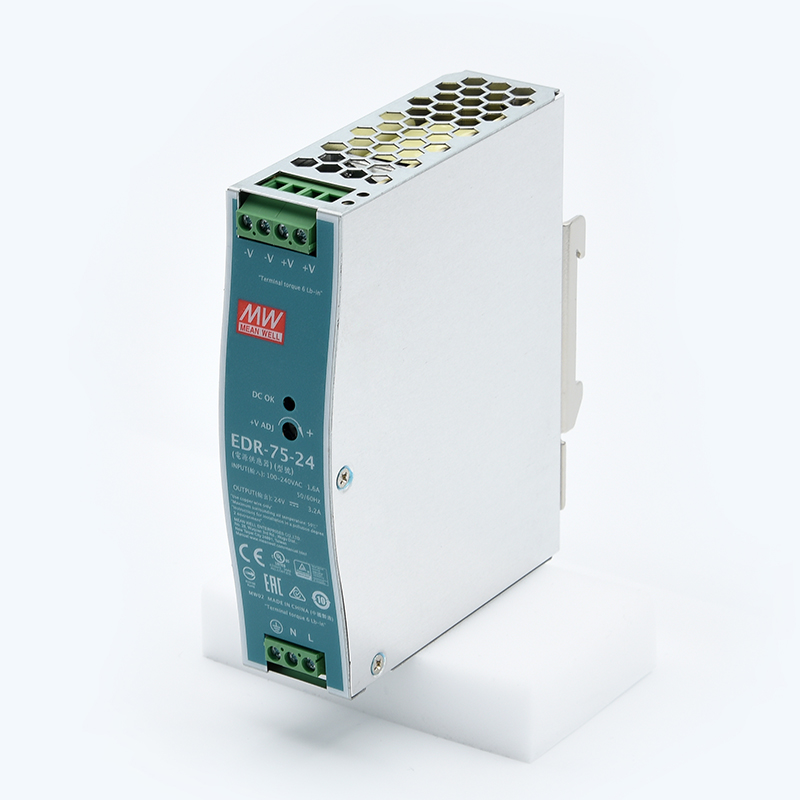
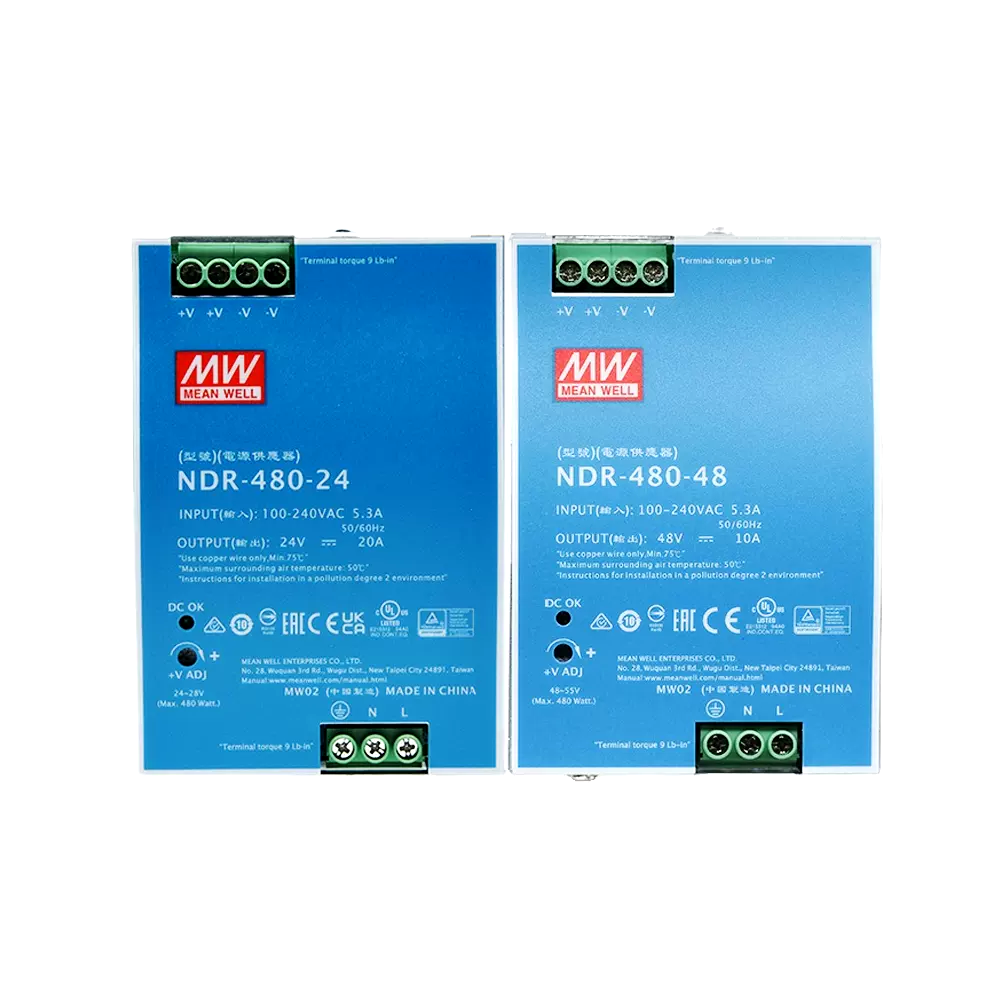
At major agro-industrial sugar milling plants (such as Ingenio Cristóbal Colón) and adjacent bio-ethanol distillation lines, power supplies operate amid high vibration, bagasse dust, and volatile ambient humidity. Our non-isolated step-down regulators work alongside heavy-duty DIN rail AC/DC units (like NDR-480 and EDR-75) to distribute clean DC power to mass flow meters, valve positioners, variable frequency drive (VFD) internal logic, and fermentation monitoring arrays.
Port of San Pedro & Thermal Power Logistics
Surrounding the Rio Higuamo estuary and the Port of San Pedro de Macorís, coastal thermo-electric power plants (e.g., CESPM, Quisqueya) and maritime cargo container terminals require marine-grade resilience. Highly stable DC-DC converters regulate battery-backed 48V and 125V DC plant control networks down to 24V and 12V supervisory instrumentation, telemetry RTUs, and coastal CCTV surveillance hubs exposed to saline sea mist.
Mitigating Harsh Coastal Environments in San Pedro de Macorís
Operating power supplies in a tropical coastal environment like San Pedro de Macorís presents distinct environmental challenges that standard industrial hardware often fails to withstand without proper engineering selection:
- Electrochemical Migration from Saline Aerosols: Close proximity to the Caribbean Sea means airborne salt moisture penetrates cabinet ventilation louvers. Non-isolated DC-DC converters equipped with conformal coating (IPC-CC-830 certified) or high-grade silicone encapsulation prevent dendritic growth across tightly pitched SMD component leads.
- Ambient Thermal Derating ($45^\circ\text{C}$ to $60^\circ\text{C}$): Unconditioned manufacturing plants in San Pedro experience interior enclosure temperatures exceeding $55^\circ\text{C}$. Utilizing high-efficiency synchronous switching regulators minimizes internal power dissipation ($P_{diss} = P_{out} \cdot (1 - \eta)/\eta$), allowing system integrators to operate equipment safely without oversized auxiliary air-conditioning.
- Common Ground Bus Topology: In decentralized automation architectures, avoiding multiple isolated returns prevents phantom ground loop currents. A well-designed non-isolated buck regulator reinforces a single, solid reference plane across the machine frame, improving immunity against inductive spikes caused by large motor starters.
Modernization Trends Shaping Industrial Power in San Pedro de Macorís
Strategic infrastructure investments and regional supply chain reshoring continue to elevate the technical expectations placed on electronic procurement teams across the Dominican Republic.
Nearshoring Expansion
International medical device and semiconductor packaging firms are shifting facilities closer to North America. San Pedro de Macorís Free Zone offers rapid shipping to US ports, demanding standardized components with UL, CE, and RoHS certifications for seamless cross-border compliance.
Renewable Microgrids
With significant solar and biomass energy installations operating across the eastern provinces, facilities are pairing commercial 48V battery energy storage systems (BESS) with non-isolated wide-input DC converters for resilient off-grid and peak-shaving operations.
Digitized Smart Manufacturing
Adoption of Industry 4.0 IoT sensors and edge computing gateways across local factories requires low-noise POL converters. Eliminating electromagnetic interference (EMI Class B compliance) prevents corrupted industrial Ethernet, Modbus, and CAN bus data packets.
Supply Continuity
Procurement directors are actively moving away from single-source, long-lead-time overseas distributors. Belmo's stock consolidation and rapid air express options eliminate crippling production line downtime during maintenance overhauls.
Selection Matrix: Choosing the Right Non-Isolated DC-DC Regulator
Before selecting a converter series for equipment builds in San Pedro de Macorís, electrical design teams must review several technical parameters to ensure long-term reliability and regulatory compliance:
1. Input Voltage Swing & Transient Margin
Identify maximum voltage spikes during inductive load switching. For 24V industrial rails, select a non-isolated converter rated for at least 36V or 40V DC input to withstand line ringing without avalanche breakdown of internal MOSFETs.
2. Ripple and High-Frequency Noise
Switching frequencies of modern non-isolated buck regulators range from 300kHz to 1.5MHz. Ensure that external ceramic output capacitors ($C_{out}$) keep output ripple under 30mVp-p when powering sensitive ADC and sensor conditioning modules.
3. Thermal Derating Curve Analysis
Consult the manufacturer's datasheet derating curve. A non-isolated converter rated for 10A at $25^\circ\text{C}$ may only sustain 6.5A at $60^\circ\text{C}$ ambient without forced cooling. Always derate current loading by 20% to 30% for high-temperature factory floors.
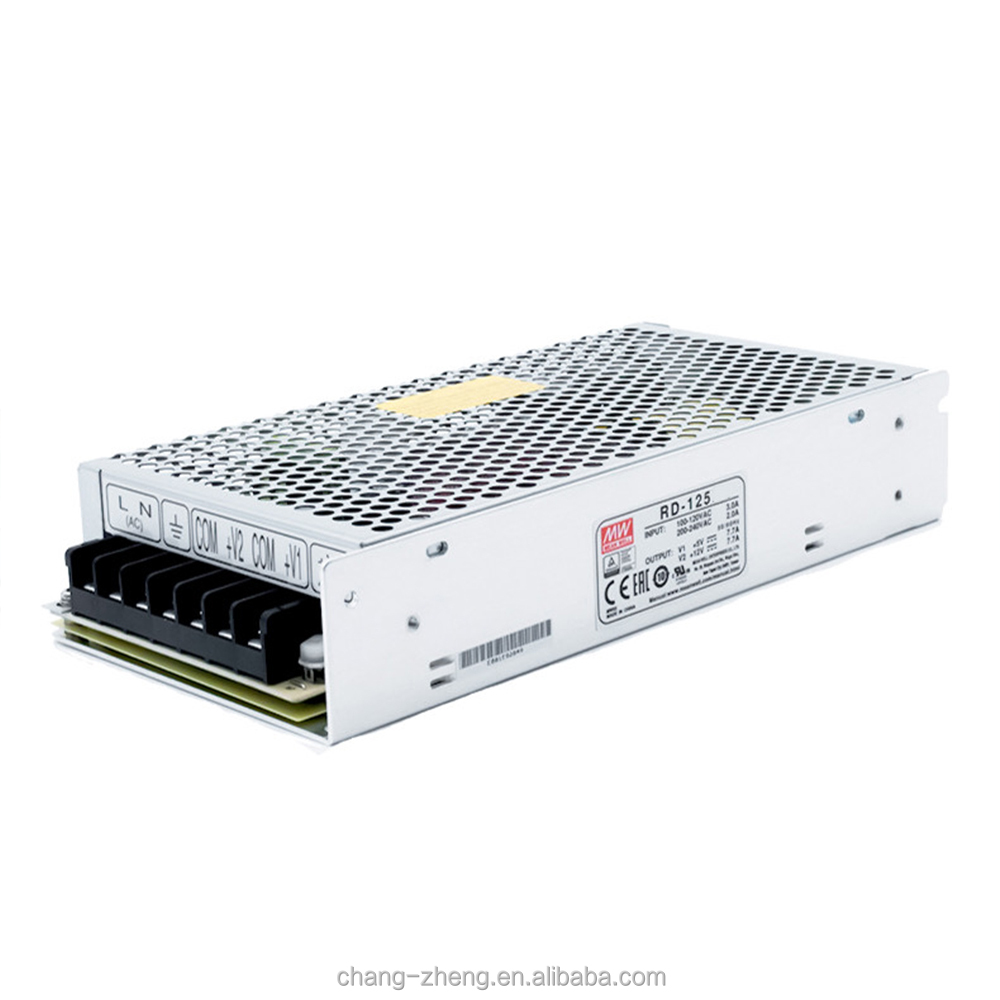
In typical control cabinets across San Pedro de Macorís, a robust AC/DC power supply—such as the NDR-120-24 or LRS-350-24—serves as the primary bulk DC bus generator. High-efficiency non-isolated DC-DC buck regulators are then deployed directly at local sub-assemblies or PCB daughterboards to derive secondary rails (12V, 5V, 3.3V). This decentralized power architecture prevents line drop along long internal cable runs and keeps overall electrical efficiency at maximum performance.
Why Engineering & Sourcing Teams Trust Belmo for Global Supply
Headquartered in the global electronics manufacturing capital of Shenzhen, Belmo bridges certified factory-direct supply directly to industrial facilities and export projects in the Dominican Republic.
SGS On-Site Audited Supplier
Our operating premises, inventory warehouses, and quality verification workflows are independently inspected and verified on-site by SGS. Buyers acquire fully genuine, factory-labeled MEAN WELL power supplies and power conversion units with complete serial traceability.
100% Pre-Shipment Power-On Testing
Every outgoing order undergoes rigorous visual inspection, parameter testing, and automated full-load burn-in verification. Comprehensive inspection photos, testing logs, and batch documentation are shared prior to dispatch, eliminating receipt of dead-on-arrival components.
Low MOQ & Consolidated Shipping
Supporting both prototype R&D batches (MOQ from 1 to 5 pieces) and full-scale factory replenishment runs. We consolidate multi-series orders—combining enclosed LRS units, DIN rail NDR/EDR units, and LED drivers—into unified export packaging shipped via air express or sea freight directly to Las Américas International Airport (SDQ) or Port of Caucedo/San Pedro.
Frequently Asked Questions by Dominican Republic Procurement Teams
Clear, technically rigorous answers to common questions encountered by plant engineers, supply chain managers, and maintenance teams in San Pedro de Macorís.
- Always apply a 25% to 30% thermal safety derating to maximum rated output current.
- Choose high-efficiency synchronous switching regulators (>93% efficiency) to minimize internal cabinet heat generation.
- Specify PCB assemblies with conformal coating to resist airborne salt spray and moisture condensation common along the Higuamo river basin and Caribbean coastline.
Accelerate Your Power Engineering Projects in San Pedro de Macorís
Whether you are designing medical cleanroom instrumentation, upgrading sugar mill automation, or securing marine terminal logistics, our Shenzhen engineering and export team delivers factory-authenticated components, tailored selection support, and rapid door-to-door delivery.