Benchmark Industrial & Architectural LED Power Supplies
Tested and audited switching power supplies offering superior Mean Time Between Failures (MTBF > 350,000 hrs), high thermal headroom, and global CE/EMC conformity.
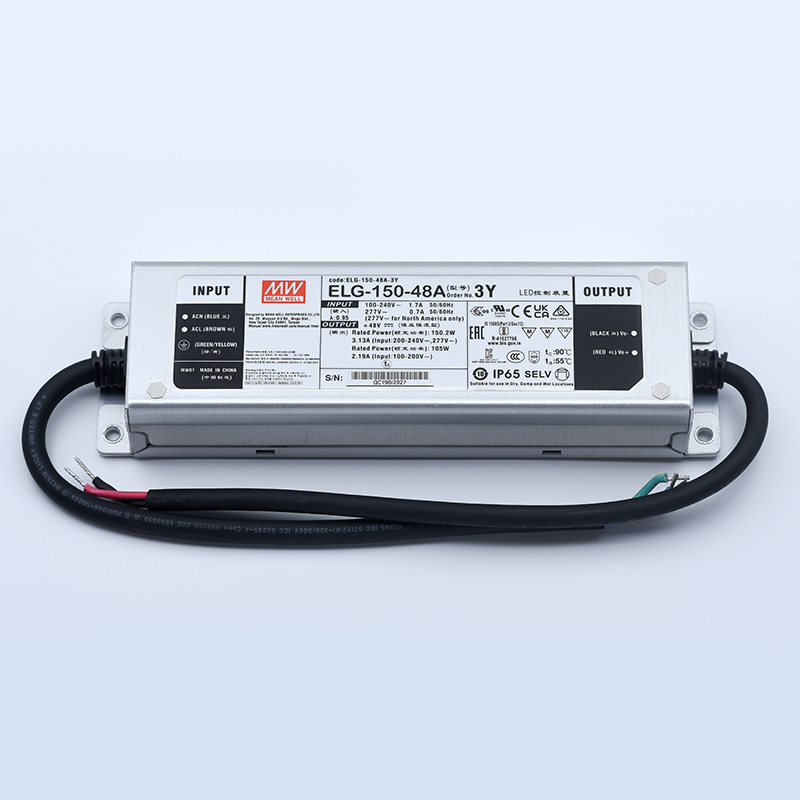
Meanwell ELG-150-24A-3Y 24V 6.25A 150W LED Power Supply Waterproof IP67
- Output Voltage: 24V DC (Adj. 21.6-26.4V)
- Rated Power: 150 Watts / 6.25A
- Surge Immunity: 6kV Line-Earth (EN 61547)
- Design Topology: Metal Case / Grounding Wire
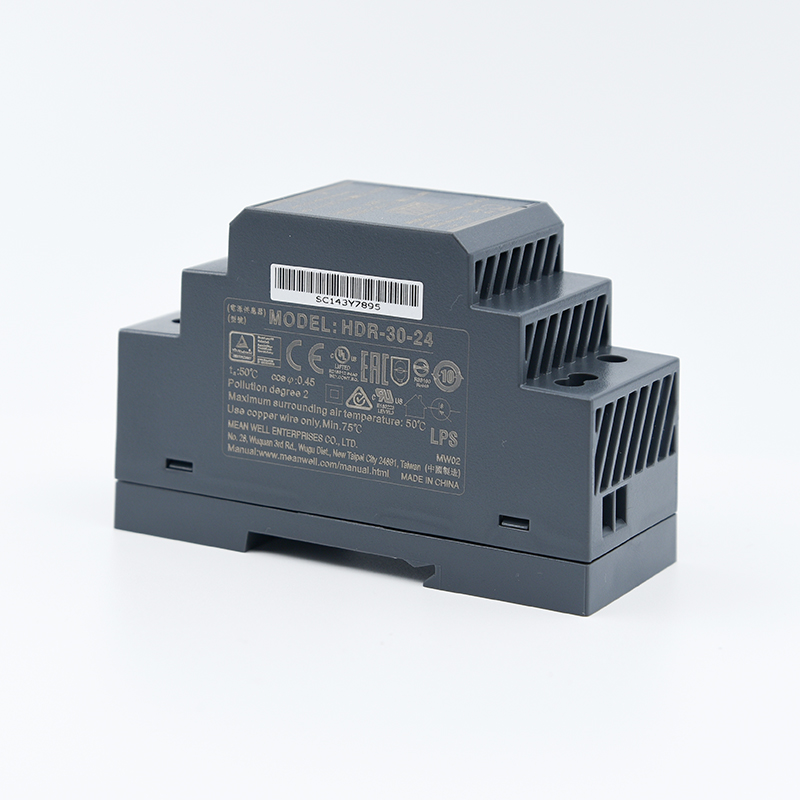
MeanWell Mean Well HDR-30-24 24V 1.5A 36W DIN Rail Power Supply for Control Systems
- Form Factor: Ultra-Slim 35mm (2SU)
- Output Spec: 24V DC / 1.5A Continuous
- No-Load Loss: < 0.3W Eco-Design
- Safety Class: EN 61558-2-16 Compliant
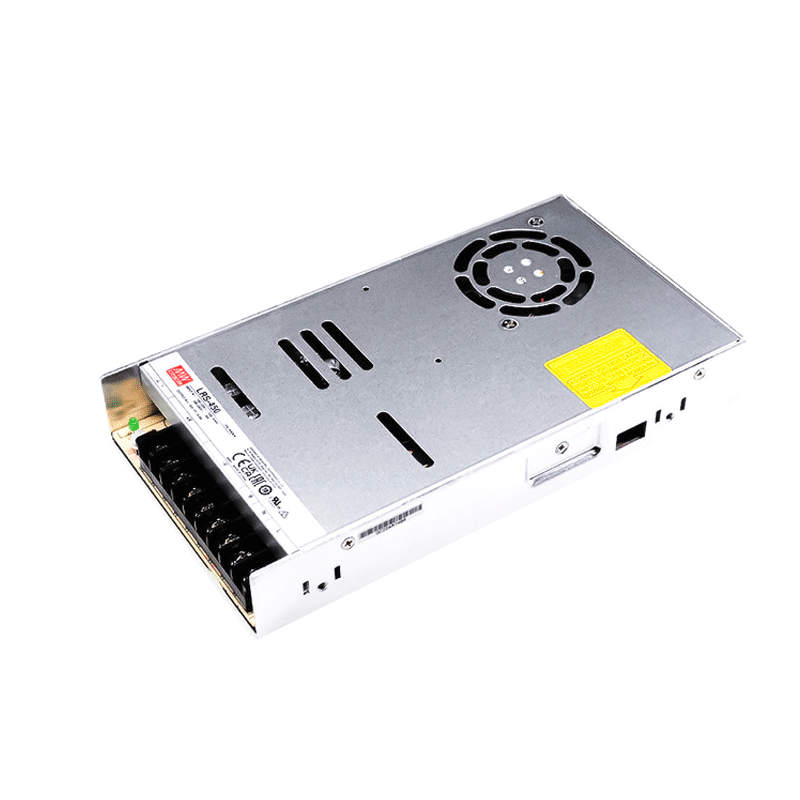
Meanwell LRS-450-12 12V 37.5A 450W Switching Power Supply for LED Strip Light
- Current Rating: 37.5A Massive Density
- Input Select: 115V / 230V AC Switch
- Thermal Control: Forced Air Fan On/Off
- Vibration Stress: 5G Acceleration Rated
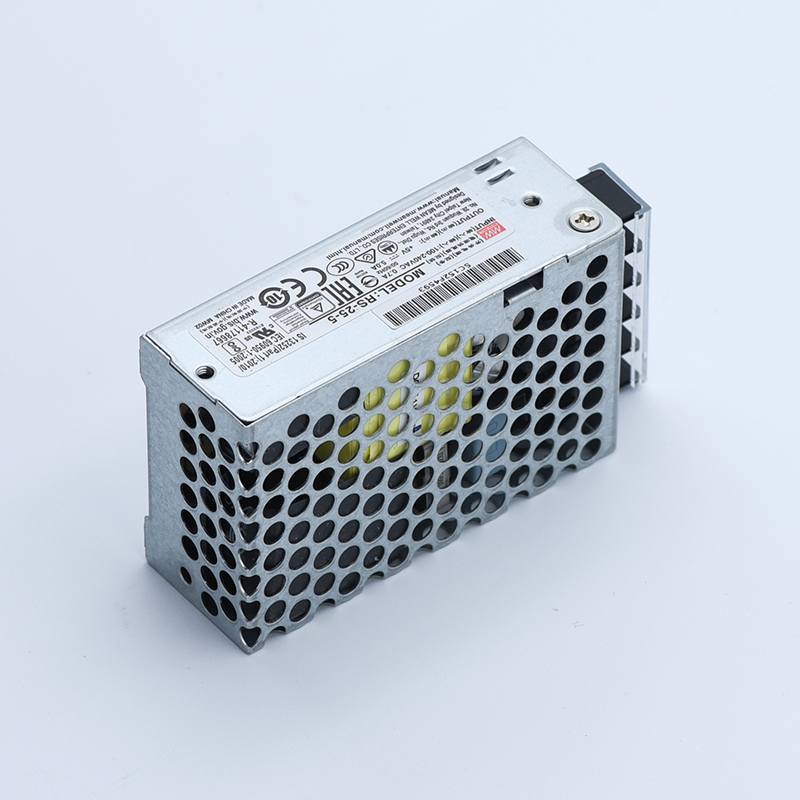
Meanwell RS-25-5 5V 5A 25W Switching Power Supply (Universal Series)
- DC Output: 5V DC / 5.0 Amperes
- Capacitor Spec: 105°C Long-Life Rated
- Operating Temp: -20°C to +70°C Derating
- Protection: Hiccup Short Circuit Mode
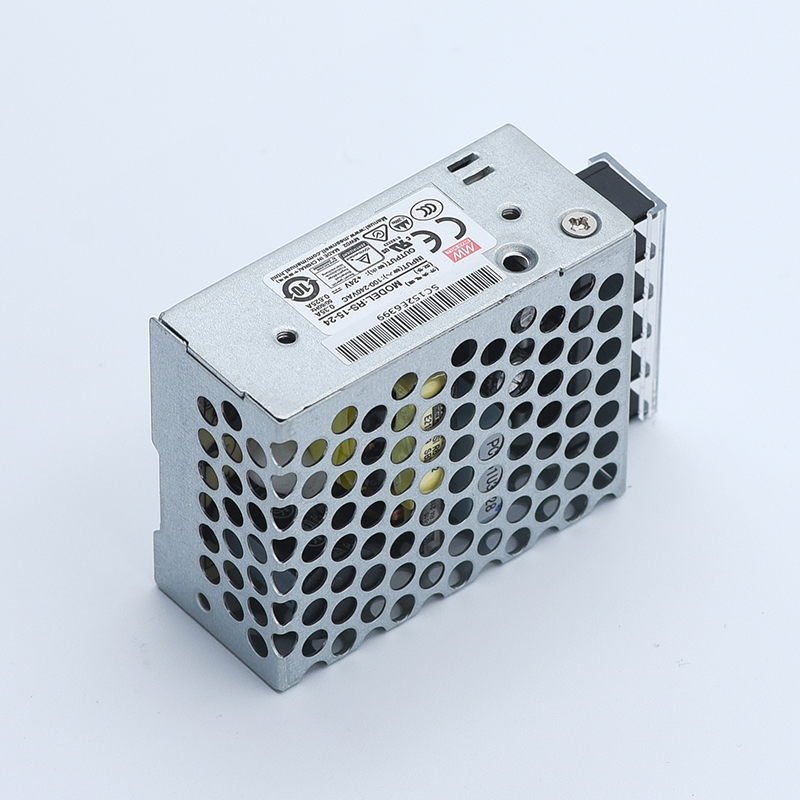
Meanwell Mean Well RS-15-24 24V 0.625A 15W Industrial Switching Power Supply
- Output Rails: 24V DC / 0.625A Clean Rail
- Efficiency: Up to 83% at Full Load
- Ripple & Noise: < 120mVp-p High Stability
- Isolation: 3000V AC Input-Output
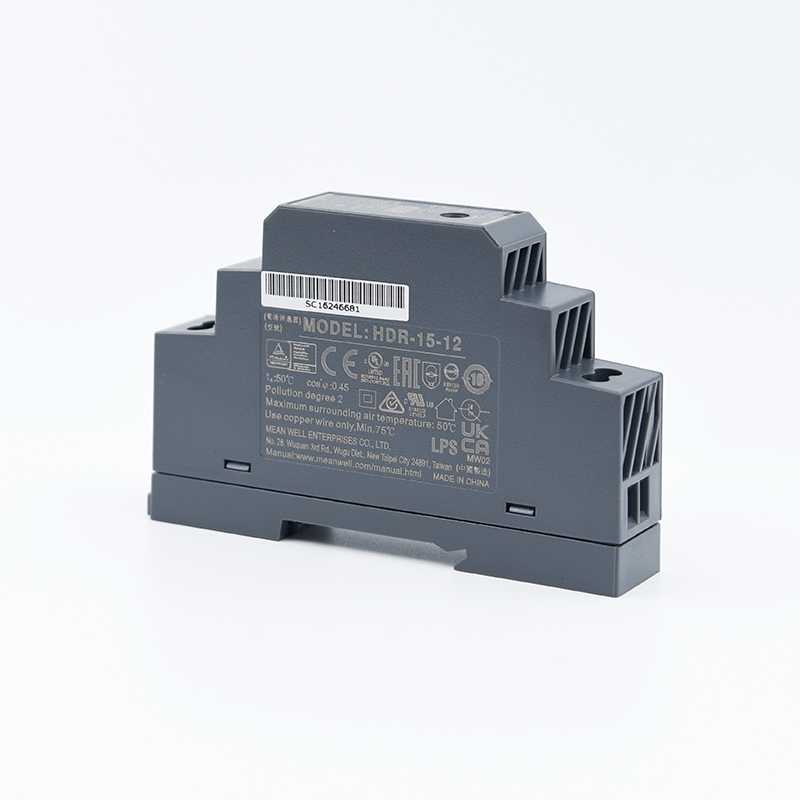
MeanWell HDR-15-12 12V 1.25A 15W DIN Rail Power Supply for Automation
- Width: 17.5mm (1SU Compact)
- DC Adjustment: 10.8V ~ 13.8V Front Pot
- Installation: Direct TS-35/7.5 or TS-35/15
- Overvoltage Cat: OVC III Industrial Rated
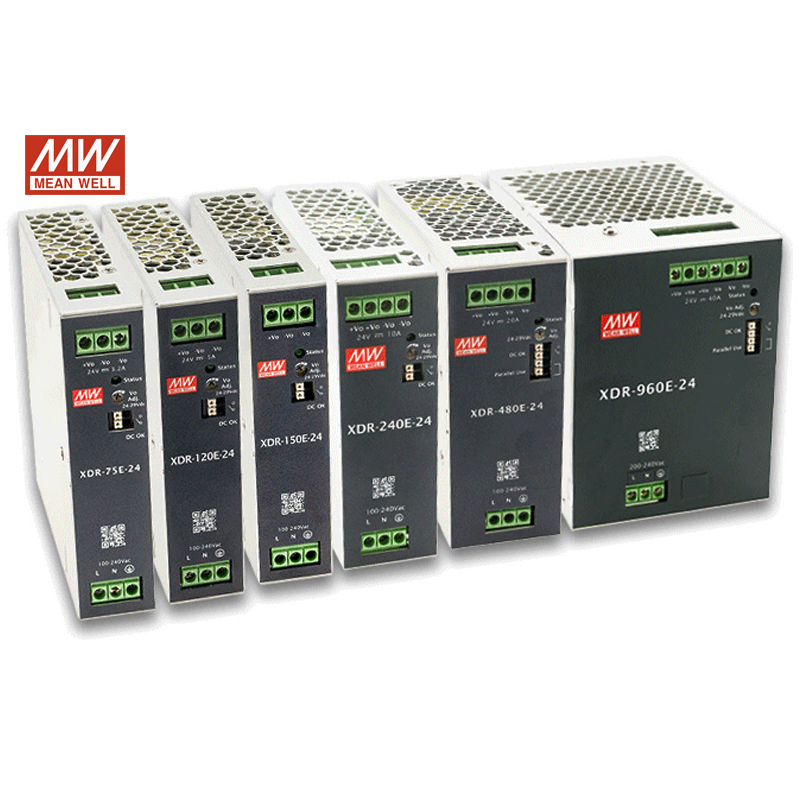
MeanWell New XDR-E 75W-960W Industrial DIN Rail Switching Power Supply
- Scalability: 75W / 120W / 240W / 480W / 960W
- Peak Load: 150% Dynamic Reserve Boost
- Power Factor: > 0.98 Active PFC Built-in
- Output Voltage: 12V / 24V / 48V Selection
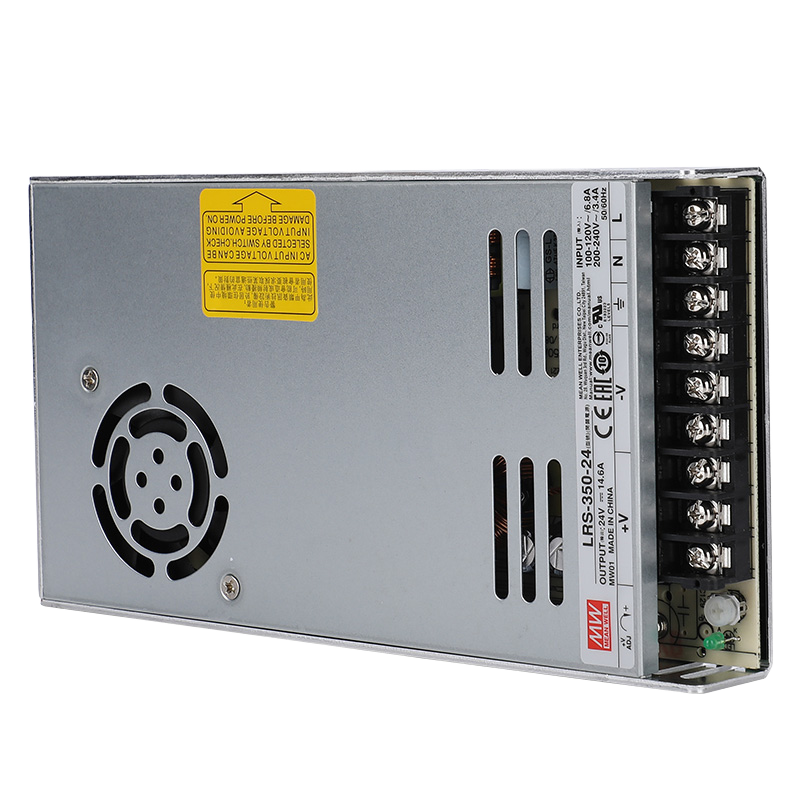
MeanWell LRS-350-24 24V 14.6A 350W Low-Profile Switching Power Supply
- Thickness: 30mm 1U Low Profile Case
- Efficiency: 88.5% High Energy Conversion
- Surge Durability: 300V AC Surge for 5 Seconds
- Global Standard: CE / CB / UL / CCC Certified
CE Marking Anatomy for LED Switching Power Supplies
In B2B electrical manufacturing and European cross-border trade, the CE mark represents rigorous legal conformity across multiple European Directives, harmonized test standards, and third-party laboratory audits.
For global engineering consultants, electrical contractors, and OEM lighting fixture manufacturers, procuring an LED switching power supply (SMPS) marked with the CE insignia is not merely a formality. It is a legally mandatory guarantee that the power conversion module complies with the Low Voltage Directive (LVD) 2014/35/EU, the Electromagnetic Compatibility Directive (EMC) 2014/30/EU, the Restriction of Hazardous Substances (RoHS) 2011/65/EU (incorporating Delegated Directive (EU) 2015/863), and the Single Lighting Regulation (SLR) Ecodesign Directive (EU) 2019/2020.
LVD 2014/35/EU Safety Rigor
Evaluates primary-to-secondary electrical galvanic isolation, creeping and clearance distances, dielectric breakdown resistance up to 3.75kV AC, touch currents under 0.25mA, and compliance with EN 61347-1 and EN 61347-2-13 standards.
EMC 2014/30/EU Immunity
Governs emissions via EN 55015 (CISPR 15) and immunity via EN 61547. Certified drivers must withstand high-energy transients, electrostatic discharge (ESD ±8kV air), and lightning line-to-earth surges exceeding 4kV to 6kV.
Harmonics & ErP Eco-Design
Enforces strict limits on total harmonic distortion (THD < 10%) and individual harmonic currents per EN 61000-3-2 Class C (>25W). Meets EU Ecodesign standby consumption thresholds below 0.5W and full-load efficiency surpassing 90%.
Harmonized Regulatory Standards for European Distribution
A common pitfall in international procurement is accepting generic "CE self-declarations" that lack complete third-party laboratory test reports (Notified Body certification). In the realm of industrial switching power supplies (such as Mean Well's LRS and HDR series) and commercial LED drivers (such as the ELG and HLG series), the technical construction file (TCF) must substantiate compliance against specific EN norms:
| Directive Target | Standard Number | Engineering Focus & Mandatory Criteria | Impact on System Reliability |
|---|---|---|---|
| Electrical Safety | EN 61347-2-13 / EN 62368-1 | SELV isolation barriers, thermal runaway cut-offs, potting flammability (UL 94V-0), creepage ≥ 5.0mm. | Prevents electrical shock, fire risk under shorted loads, and component carbonization in moist enclosures. |
| Conducted & Radiated EMC | EN 55015 / CISPR 15 | EMI suppression from 9kHz to 300MHz; containment of high-frequency switching noise on AC mains. | Prevents flicker, interference with building communication lines, Wi-Fi, radio telemetry, and PLC controls. |
| Harmonic Current Injection | EN 61000-3-2 (Class C) | Mandatory active Power Factor Correction (PFC > 0.95); suppression of 3rd, 5th, and 7th harmonic multiples. | Mitigates overheating of neutral conductors in 3-phase building grids; prevents transformer humming and power loss. |
| Surge & Transient Immunity | EN 61547 / IEC 61000-4-5 | Combination wave testing: Differential mode (L-N) 2kV ~ 4kV; Common mode (L,N-PE) 4kV ~ 6kV. | Guarantees survival during grid switching events, atmospheric inductive surges, and heavy motor load kicks. |
| Environmental / Ecodesign | (EU) 2019/2020 ErP / RoHS 3 | Max no-load power < 0.5W; full-load efficiency thresholds > 88-93%; restriction of lead, cadmium, phthalates. | Meets sustainability directives, minimizes lifetime electrical cooling costs, enables CE/RoHS green customs clearance. |
Technical Verification Note for Importers
When importing LED power supplies into the European Economic Area (EEA), the importer of record is legally liable under European market surveillance laws. ShenZhen Belmo Technology Co., Ltd. provides comprehensive factory test documentation, serial-traceable test certificates, and complete EMC/LVD reports with every shipment, ensuring smooth clearance through Rotterdam, Hamburg, Felixstowe, and other major ports.
Future Technological Trends in LED Power Supply Design
The transition from silicon MOSFET switches to Wide Bandgap semiconductors, combined with digital bidirectional controls, is revolutionizing power density, thermal efficiency, and lifecycle longevity.
The industrial and commercial lighting industries are undergoing an aggressive technological transition. Power supplies are evolving from dumb "black boxes" into intelligent, addressable power communication nodes that interface with modern Building Management Systems (BMS). As energy codes like the EU Energy Performance of Buildings Directive (EPBD) and ASHRAE 90.1 become stricter, five engineering shifts are dominating the next generation of LED switching topologies:
1. Gallium Nitride (GaN) Topologies
Integration of GaN High-Electron-Mobility Transistors (HEMTs) enables switching frequencies over 300kHz with near-zero reverse recovery losses, reducing magnetic transformer footprints by 40% and achieving 95%+ efficiency.
2. DALI-2 & D4i Digital Intelligence
Migration from simple 0-10V analog sinking dimmers to bidirectional DALI-2 (IEC 62386) and D4i architectures. Drivers report real-time energy metering (Part 252), operating temperatures, run-hours, and predictive diagnostics.
3. Dynamic NFC Programming
Near Field Communication (NFC) chips embedded in modern drivers allow factory assembly lines and field technicians to adjust output current down to 1mA precision wirelessly without applying AC power, speeding SKU customization.
4. Circular Economy & Serviceability
New ErP Ecodesign requirements demand that LED control gears be removable and replaceable for repair rather than permanently potted into luminaires. This has triggered massive demand for field-serviceable IP67 and DIN rail formats.
Active Power Factor Correction (PFC) & Modern Grid Stability
In modern installations where thousands of LED drivers are connected to a single commercial distribution panel, non-PFC or passive PFC power supplies generate severe crest factors and non-sinusoidal current spikes. This leads to neutral line overloading, nuisance tripping of residual current circuit breakers (RCCBs), and substantial penalty fees from utilities for reactive power.
Modern CE-certified switching power supplies employ two-stage topologies: an active boost PFC stage operating in Transition Mode (TM) or Continuous Conduction Mode (CCM), followed by an LLC resonant half-bridge converter. This configuration ensures an ultra-flat power factor (>0.96 from 50% to 100% load) while limiting total harmonic distortion (THD) below 8%. This level of performance is critical for horticultural grow lighting, high-bay factory illumination, and municipal street lighting grids.
Strategic Procurement Trends: Navigating 2025–2030 Sourcing
How international procurement directors, electrical wholesalers, and engineering EPCs are balancing Total Cost of Ownership (TCO), component shortages, and supplier vetting.
Procurement professionals in the power electronics space face a complex geopolitical, logistics, and quality landscape. The post-shortage supply chain has shifted focus from "procure at any cost" to structured risk mitigation, traceable component provenance, and lifecycle cost analysis. Key sourcing paradigms shaping modern procurement contracts include:
Supplier Auditing & Provenance
Top-tier B2B buyers now mandate verified physical facility audits (such as SGS on-site inspections) and strict anti-counterfeiting protocols to ensure all Mean Well units carry traceable factory serial numbers and genuine Japanese or Taiwanese capacitors.
TCO vs. Initial Unit Price
Field labor to replace a blown LED power supply in an outdoor street fixture or high-ceiling warehouse ranges from €150 to €450. Selecting high-tier units with 5- to 7-year warranties reduces failure rates to < 0.2%, maximizing long-term project ROI.
Consolidated Multi-Category Orders
Rather than managing split purchase orders across separate suppliers for DIN rail modules, open-frame PCBs, waterproof drivers, and inverters, leading buyers consolidate their supply chain with specialized hubs like Shenzhen Belmo Technology.
Total Cost of Ownership (TCO) Calculation Model
When evaluating competitive tenders for municipal lighting or industrial plant automation, savvy engineering teams utilize the following TCO equation:
TCO = CapEx + (Operating Hours × kWh Tariff × [1 - η]) + (Failure Probability × Field Repair Cost)
Where η represents the conversion efficiency. A 3% improvement in power supply efficiency (e.g., 90% vs 93%) on a 10,000-fixture street lighting installation saves hundreds of thousands of kilowatt-hours over a 7-year operating cycle, rendering initial unit price differences inconsequential compared to operational savings.
Why International Engineering Teams Partner With Belmo
Headquartered in Shenzhen's electronics innovation cluster, Belmo combines official Mean Well brand authenticity, strict testing protocols, and complete export logistics.
Shenzhen Belmo Technology Co., Ltd. operates from its verified facility at Honggao Industrial Park, Songbai Road, Shiyan Subdistrict, Shenzhen. We eliminate the uncertainty common in global power supply procurement by combining authentic brand sourcing, complete test documentation, and responsive engineering support.
SGS On-Site Audited
Our business premises, legal standing, export operations, and warehouse facilities are independently inspected and verified on-site by SGS, providing institutional security for international B2B transactions.
100% Power-On & Visual Testing
Before packing, every single order undergoes visual inspection and bench power-on checks under nominal load. Real-time testing photographs and serial logs are provided to buyers prior to international dispatch.
Low MOQ Flexibility (from 1 pc)
We eliminate high minimums. Whether you require a single pilot sample for CE prototype testing or container loads for ongoing OEM production, we support flexible, mixed-model ordering across all product families.
End-to-End Export Logistics
Complete customs packaging, wooden palletization compliant with ISPM 15, DDP air freight, consolidated sea cargo, and transparent HS code classification (850440) for hassle-free European, American, and Asian import processing.
Frequently Asked Technical & Sourcing Questions
Comprehensive engineering insights addressing common technical challenges, warranty coverage, and compliance standards encountered by electrical project managers.
How do I distinguish genuine Mean Well power supplies from counterfeit units?
Counterfeit power supplies present catastrophic fire and liability risks. Authentic Mean Well power supplies feature high-definition laser-etched or tamper-resistant holographic labels, clean terminal stamping, and unique serialized barcodes. Each barcode can be validated against Mean Well's global manufacturing database to confirm production date, factory location, and test records. Shenzhen Belmo supplies only original, fully traceable units with verified certificates of origin.
What is the practical difference between Constant Voltage (CV) and Constant Current (CC)?
Constant Voltage (CV) supplies (e.g., LRS, LPV series) maintain a fixed DC potential (such as 12V or 24V) regardless of load current changes, which is ideal for parallel LED strips with on-board current-limiting resistors. Constant Current (CC) drivers regulate the amperage directly through the LED diodes, dynamically adjusting voltage within a compliance range. Hybrid drivers (e.g., ELG, HLG) operate in CV mode up to full load, transitioning into CC mode under overload or direct drive conditions to protect LEDs against thermal runaway.
Why is inrush current critical when selecting Miniature Circuit Breakers (MCBs)?
During initial AC switch-on, SMPS input filter capacitors draw an instantaneous charging spike known as inrush current, which can reach 40A to 75A for a fraction of a millisecond. If multiple drivers are connected to a single circuit breaker, simultaneous startup spikes can trip standard Type B MCBs. Engineering designs must either utilize Type C or Type D circuit breakers, stagger turn-on sequences, or incorporate NTC thermistors and active inrush current limiters (such as Mean Well ICL-16 or ICL-28).
What distinguishes IP67 ratings from IP65 and IP68 in outdoor lighting installations?
IP (Ingress Protection) ratings define protection against solids and liquids per EN 60529. IP65 indicates protection against low-pressure water jets from any direction, making it suitable for sheltered fixtures. IP67 certifies complete protection against water ingress during temporary immersion up to 1 meter depth for 30 minutes, which is essential for underground junction boxes, architectural floodlights, and street lighting. IP68 denotes continuous hermetic submersion under deeper pressurized water, such as in fountain and marine lighting.
How does operating temperature affect the published MTBF and lifetime?
Mean Time Between Failures (MTBF), calculated per Telcordia SR-332 or MIL-HDBK-217F, represents the statistical reliability of the power supply design. However, actual operational lifespan is dictated by the thermal stress on internal electrolytic capacitors. Following Arrhenius' Law, every 10°C increase in internal capacitor temperature cuts operating lifespan in half. Maintaining adequate airflow, derating output loads above 50°C ambient, and selecting units with 105°C long-life capacitors (standard in Mean Well industrial series) ensures maximum field longevity.
What documentation accompanies commercial shipments for European customs clearance?
Standard export consignments from Shenzhen Belmo include an official Commercial Invoice with exact 8-digit HS Code classification (8504.40.19 / 8504.40.90), Packing Lists with gross/net weights and dimensions, Air Waybills (AWB) or Ocean Bills of Lading, Certificate of Origin, and complete CE Declarations of Conformity (DoC) referencing the applicable LVD, EMC, and RoHS directives. Full CB test reports and UL certificates can also be provided upon request.
Accelerate Your Power Supply Sourcing Project
Connect with our Shenzhen engineering and export team. Send your bill of materials, project requirements, or target Mean Well part numbers for rapid price and availability verification.
Inquire Now