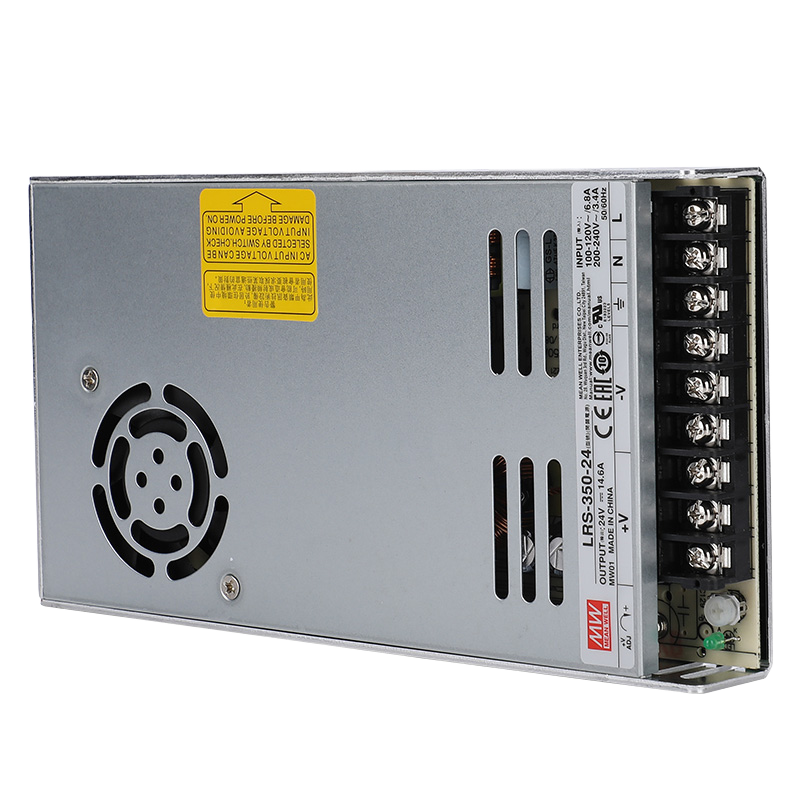
AC/DC Enclosed Single Output
Specified by OEM mechanical engineers, electrical panel fabricators, and mission-critical automation contractors worldwide.
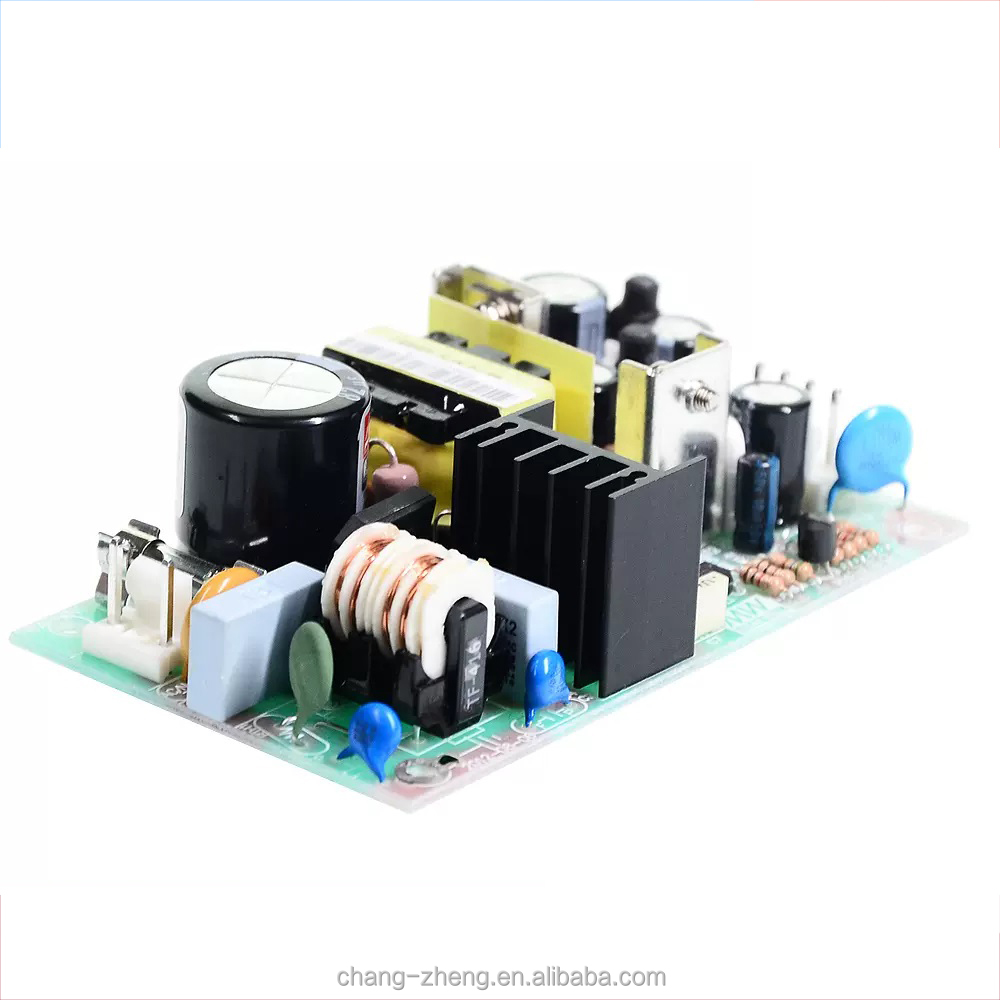
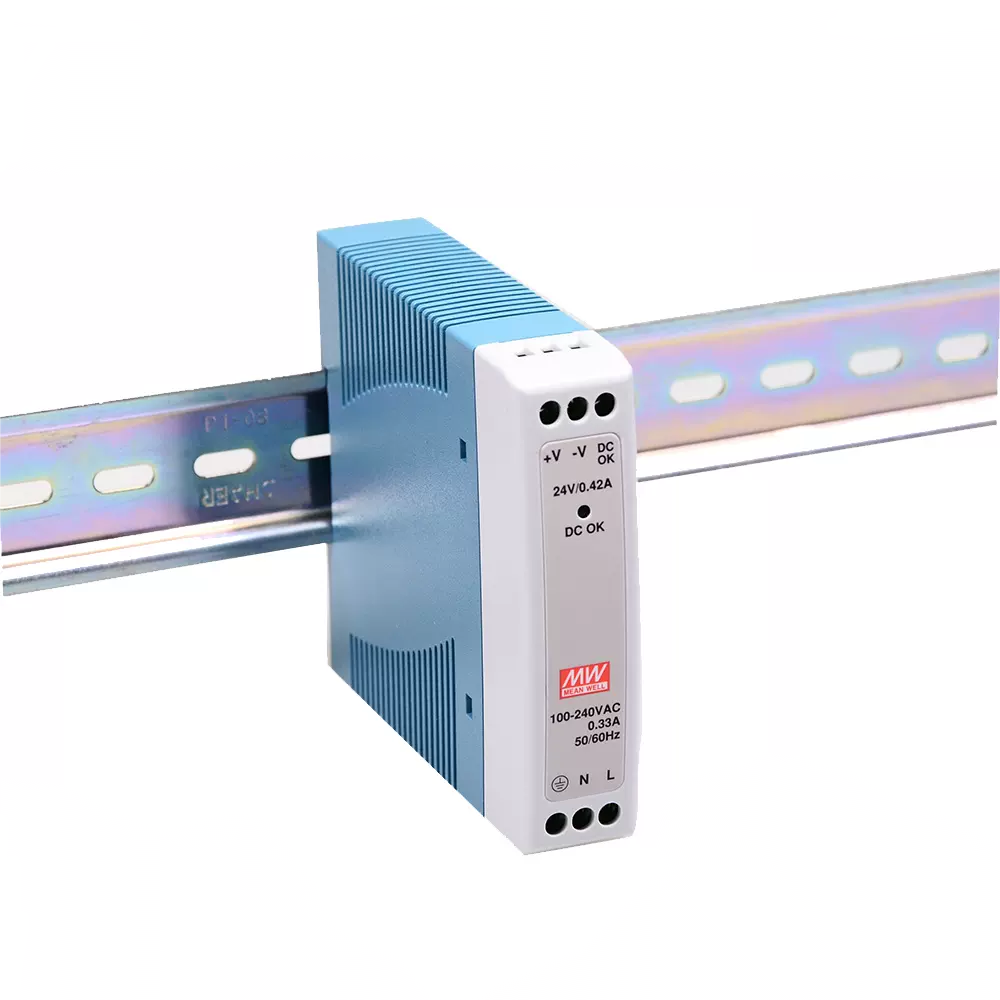
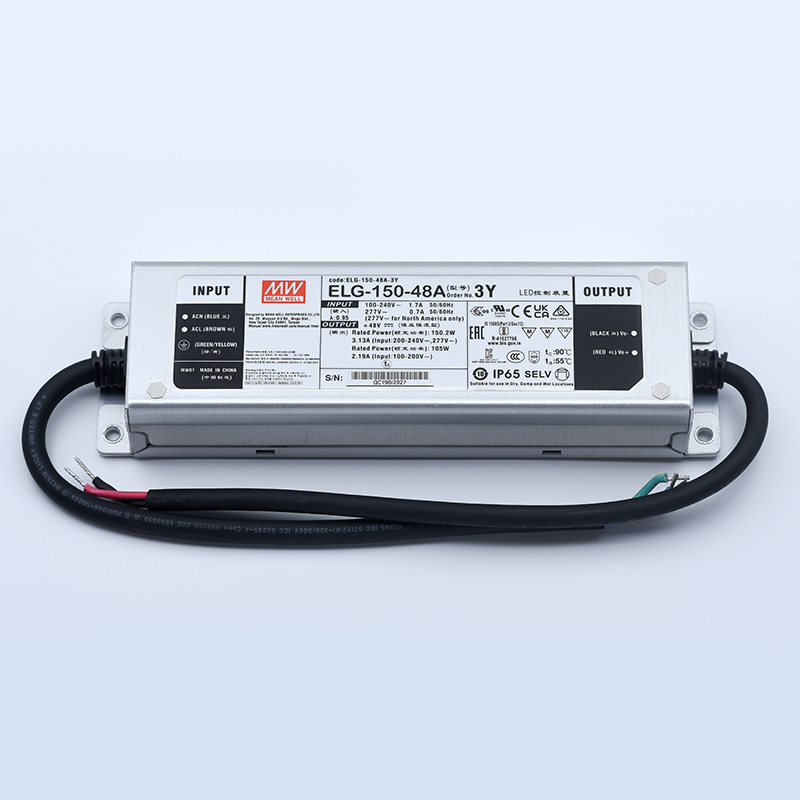
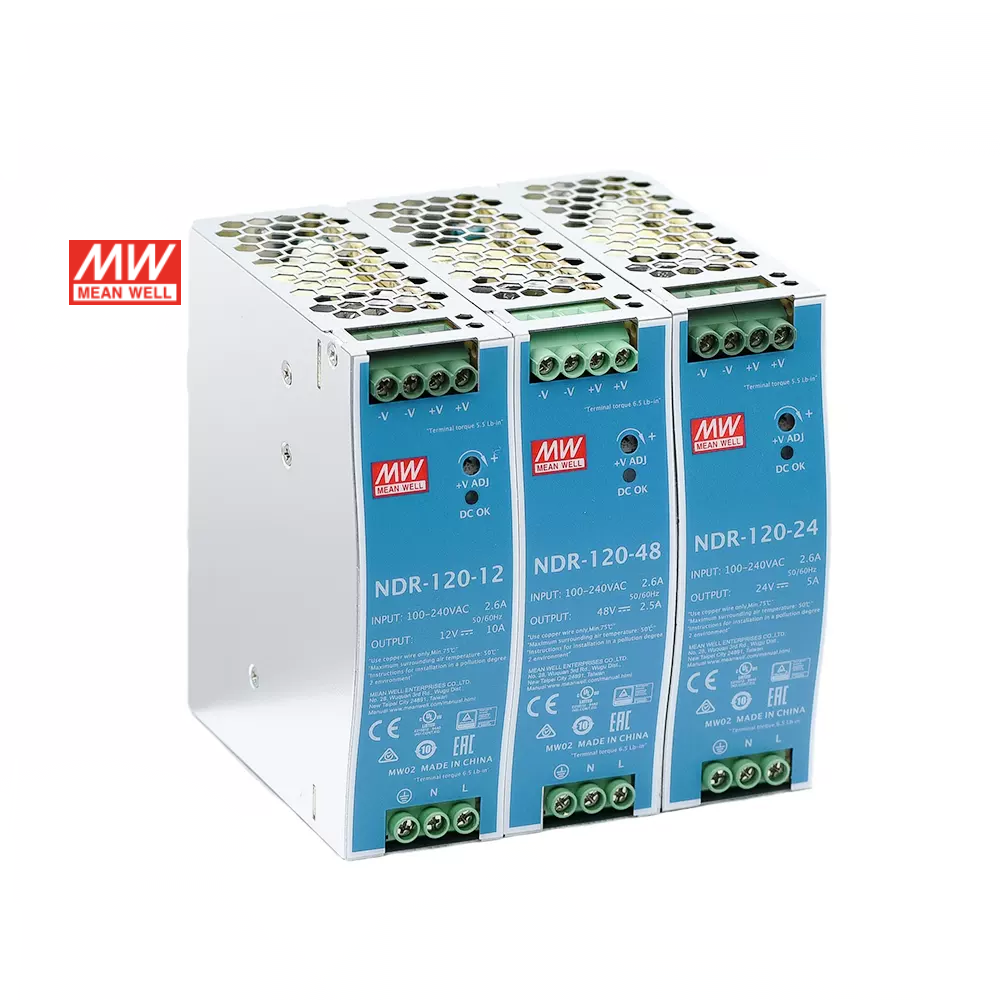
A technical guide for hardware engineers, procurement managers, and systems integrators navigating modern power conversion requirements.
In modern industrial electronics, the Switched-Mode Power Supply (SMPS) serves as the primary gateway determining systemic longevity, electrical safety, and overall energy conversion efficiency. Selecting the correct power supply manufacturer requires auditing technical factors beyond nominal voltage and wattage: electromagnetic compliance (EMC), thermal dissipation dynamics, inrush current thresholds, and harmonic mitigation under variable load conditions.
Standard switched-mode architectures have transitioned rapidly from basic flyback configurations toward synchronous rectification, interleaved continuous conduction mode (CCM) Power Factor Correction (PFC), and LLC resonant converter stages. For precision automated control cabinets, machinery, and distributed IoT nodes, poor selection yields intermittent MCU resets, unexpected relay chatter, or early electrolytic capacitor dry-out due to uncontrolled internal hot-spots.
Modern industrial SMPS units exceeding 75 Watts incorporate Active Power Factor Correction (cosφ > 0.95), conforming directly to EN61000-3-2 limits. This lowers reactive power transmission losses and stops neutral line overheating across dense distribution boards.
Inductive and capacitive loads subject switching supplies to momentary turn-on stress reaching 40A–60A. Industrial-grade series integrate NTC thermistors backed by bypass relays to suppress nuisance tripping of upstream miniature circuit breakers (MCBs).
Electrolytic capacitors adhere to the Arrhenius rule: every 10°C drop in internal operating temperature doubles useful service life. Rigorous procurement must evaluate manufacturer thermal derating curves running between -20°C and +70°C ambient temperatures.
How supply chain digitalization, semiconductor innovation, and compliance mandates are reshaping global PSU sourcing.
Enterprise procurement is migrating toward digitally controlled supplies featuring PMBus, CANopen, or IO-Link telemetry. Facility operators demand real-time diagnostics monitoring operational temperature, output ripple degradation, and live loading profiles to execute predictive maintenance before unscheduled shutdowns occur.
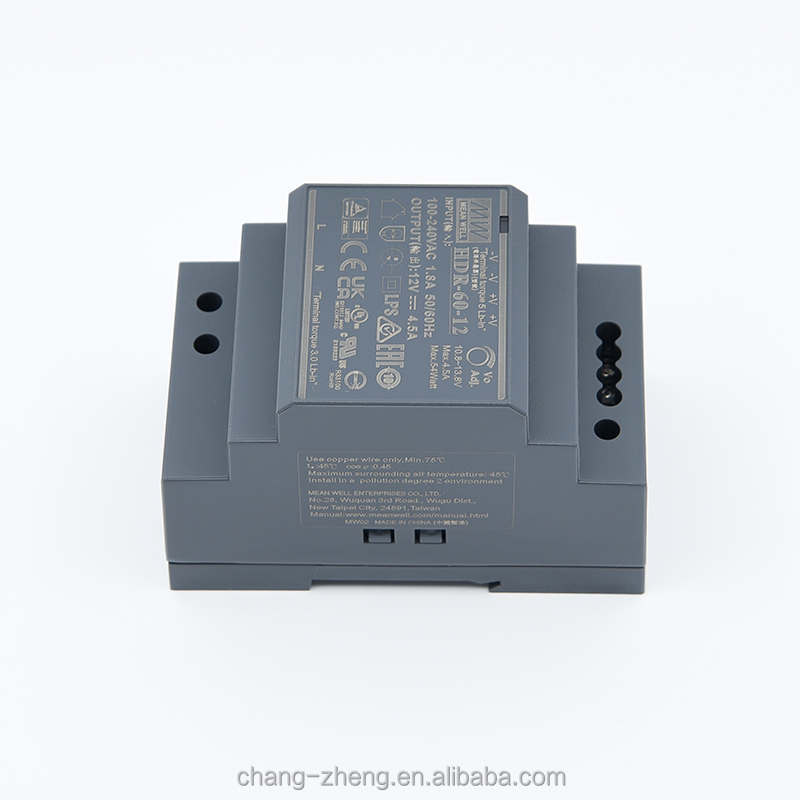
Control cabinet space commands an increasing premium in factory layout design. The shift toward ultra-slim DIN rail modules (such as HDR and NDR series) enables engineering teams to compress cabinet footprints by 30% to 45%, leaving ample space for programmable logic controllers, I/O blocks, and circuit safety hardware.
Buyers now bypass fragmented brokers to partner with SGS-verified channel distributors capable of delivering verifiable serialized test reports. Cross-border regulatory barriers make authentic, documented compliance with UL 62368-1, EN 61558, and CE mandatory for customs clearance and liability mitigation.
Material science and circuit architecture breakthroughs driving the next era of industrial energy efficiency.
Gallium Nitride (GaN) and Silicon Carbide (SiC) MOSFETs exhibit substantially lower gate charges and negligible reverse recovery losses compared to legacy silicon switches. By operating switching frequencies into megahertz ranges, power supplies dramatically downscale internal planar magnetics while achieving operating efficiencies upwards of 94% to 96%.
Industrial deployment environments frequently expose power conversion hardware to airborne chemical corrosives, heavy moisture, and fluctuating thermal extremes. The proliferation of IP67 and IP68 cast-aluminum enclosures—such as the MEAN WELL ELG and HLG lines—guarantees continuous field resilience in municipal infrastructure and greenhouse horticulture.
With stringent global grid codes like IEEE 519 and EN 55032 Class B enforcement, leading manufacturers are integrating two-stage common-mode filters and active snubber circuits directly on the main PCB. This suppresses radiated electromagnetic interference (EMI) without relying on costly external choke installations.
Delivering authentic MEAN WELL power solutions backed by verifiable engineering support and audited logistics.
Operating directly out of the Honggao Industrial Park in Shenzhen, our corporate facilities and distribution centers have been independently inspected and validated by SGS, providing global purchasers with verified sourcing credibility.
Every single power unit supplied bears original production labels and registered serial numbers. We enforce an uncompromising anti-counterfeit standard, pairing orders with complete engineering datasheets and official compliance records.
To eliminate Out-of-Box Failure (OBF), units undergo functional visual inspection and live-circuit power-on checks prior to container packaging, providing high certainty for mission-critical industrial installations.
We support prototype design cycles, field trial validation, and replacement inventories with low MOQ tiers starting from 1 to 5 pieces across premier product lines including LRS, HDR, NDR, and ELG.
From low-profile PCB open-frame units to high-wattage DIN rail supplies and pure sine wave inverters, buyers can consolidate diverse bill-of-materials (BOM) orders into single, customs-cleared international shipments.
Clients enjoy full original manufacturer warranty coverage extending from 2 to 7 years depending on the chosen series, supported directly by our responsive bilingual technical engineering team in Shenzhen.
Direct answers addressing technical parameters, authentic sourcing verification, and cross-border supply operations.
Every original MEAN WELL switching power supply shipped from our facility features laser-marked or serialized production labels containing lot numbers traceable to factory production runs. Furthermore, authentic units feature branded transformers, top-grade electrolytic capacitors rated at 105°C, and documented safety certification markings (UL, CE, CB, EAC, TUV) verified against global registry databases.
Constant Voltage (CV) power supplies (such as LRS and NDR series) regulate output voltage within tight tolerances (e.g., ±1%) across variable load currents, serving as the standard choice for automated control electronics, PLCs, sensors, and parallel LED strip installations. Constant Current (CC) drivers regulate a steady amperage while dynamically adjusting output voltage, preventing thermal runaway in direct-drive high-power LED strings and inductive charging systems.
For standard convection-cooled industrial applications, an operational headroom margin of 20% to 25% is recommended (i.e., operating continuous loads at no more than 75% to 80% of rated capacity). For installations driving inductive equipment, motors, or capacitive arrays characterized by heavy inrush currents, choose power supplies equipped with peak-load capacity (such as the SDR series supporting up to 150% peak load) or calculate headroom against peak power draws.
We maintain comprehensive stock buffers of high-demand standard models (LRS, NDR, MDR, HDR, ELG), facilitating dispatch within 48 to 72 hours. Sample and small-batch orders feature an accessible MOQ of 1 to 5 units. All international consignments are packaged in multi-ply corrugated export cartons reinforced with pallet corner protectors and moisture-proof stretch wrapping.
Depending on the selected hardware family, we supply copies of official manufacturer Declarations of Conformity (DoC), UL Listing/Recognition reports under standard 62368-1/508, CB scheme test certificates, CE EMC/LVD reports, and RoHS/REACH substance compliance declarations required for European and North American industrial machinery integration.